If you grew up in the ’50s, ’60s, or ’70s, there’s a good chance you remember Mercury. Maybe your parents had one in the driveway. Maybe you learned to drive in one. Or maybe you admired the neighbor’s brand-new Cougar and dreamed about having one yourself.
Mercury was never the cheapest car on the lot, but it wasn’t out of reach either. It was the “step up” from a Ford — a little more style, a little more comfort, and sometimes, a lot more personality.
The Early Days
Mercury first rolled out in 1938, during a time when Ford wanted something in between its everyday Ford models and its luxury Lincoln line. It worked. The first Mercury — the Mercury Eight — had more power and more room than a Ford, but it still felt like a car for regular Americans.
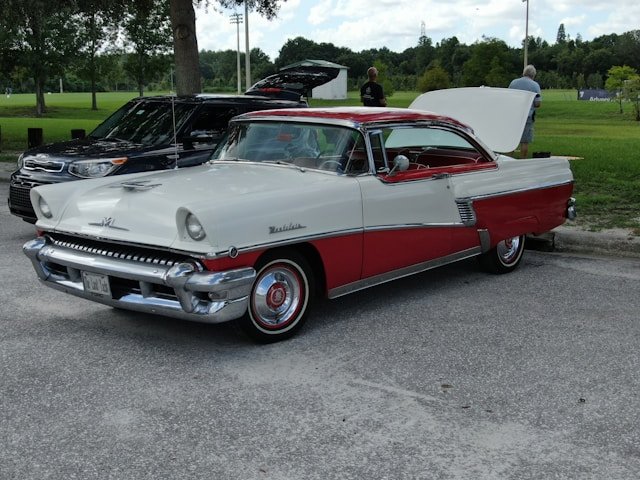
After World War II, Mercury really hit its stride. In the late ’40s and early ’50s, Mercurys had that long, low look that turned heads. The Monterey and the Turnpike Cruiser stood out with big chrome grilles and details you just don’t see on cars today.
Mercury and American Culture
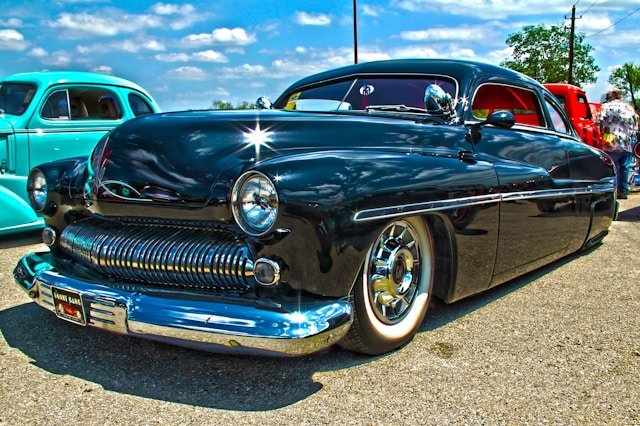
If you were a teenager in the 1950s, you might remember the “lead sled” craze — customizers chopping and lowering old Mercurys until they looked like rolling works of art. The ’49 Mercury became one of the most famous cars in hot rod history.
And of course, there was the movie Rebel Without a Cause. James Dean, leather jacket and all, behind the wheel of a Mercury. That image alone gave the brand a cool factor that lasted for years.
The Cougar Years
By the late 1960s, the Mustang was a huge hit for Ford. But Ford realized some buyers wanted something a little bigger and more refined. That’s where the Mercury Cougar came in. It had muscle, sure, but it also had a touch of class — hidden headlights, a smoother ride, and interiors that felt a bit more upscale.
The Cougar was an instant success. If you were a young professional or starting a family back then, it was the perfect mix of sporty and practical. Mercury also had performance models like the Marauder and Cyclone for those who wanted even more punch.
Shifting Gears in the 1970s
By the mid-’70s, the car world was changing. Gas prices shot up, new safety and emissions rules came in, and the muscle car days began to fade. Mercury shifted toward bigger, more comfortable sedans.
The Grand Marquis became a favorite — roomy, smooth, and built for long highway drives. If you ever rode in one on a family vacation, you probably remember the sofa-like seats and the way it seemed to float down the road.
In the 1980s and ’90s, Mercury was still building solid cars, but they started to look a lot like their Ford cousins. The Sable was basically a fancier Taurus. The Mountaineer was an Explorer with a different grille. For people who loved Mercury’s individuality, that uniqueness was fading.
Even so, many families stuck with the brand. The Grand Marquis in particular had a loyal following — from small-town police departments to retirees who appreciated its comfort and durability.
The Final Chapter
By the 2000s, Mercury’s sales were slipping. Younger buyers weren’t as interested, and the lineup had shrunk to just a few models. Ford tried to freshen things up with cars like the Milan sedan and a revived Montego, but the magic just wasn’t there anymore.
In 2010, Ford made the announcement that many of us knew was coming: Mercury would be shut down. The last car — a 2011 Grand Marquis — rolled off the line in January 2011, quietly ending more than 70 years of history.
Why We Still Remember
Mercury was never the flashiest brand, but it had a way of making you feel just a little special. It was the car you bought when you wanted to move up in the world without going over the top.
For some, it was a first car. For others, it was the one that carried their family across the country. And for many, it was simply a familiar sight on neighborhood streets for decades.
Even today, when you see a well-kept Cougar at a car show or a Grand Marquis cruising down the road, it brings back memories — of a time when cars had more chrome, more character, and maybe just a little more heart.