Detroit in the 1950s and early 1960s had a strange habit. It built its plainest, cheapest family cars, the ones with rubber mats and dog-dish hubcaps, and then let buyers order the biggest engine in the catalog for them. Sometimes that was for racing rules. Sometimes it was simply because the order form allowed it.
The result was a generation of sleepers. Here are eight of them, in the order they appeared, with a note on how often each one was actually built that way.
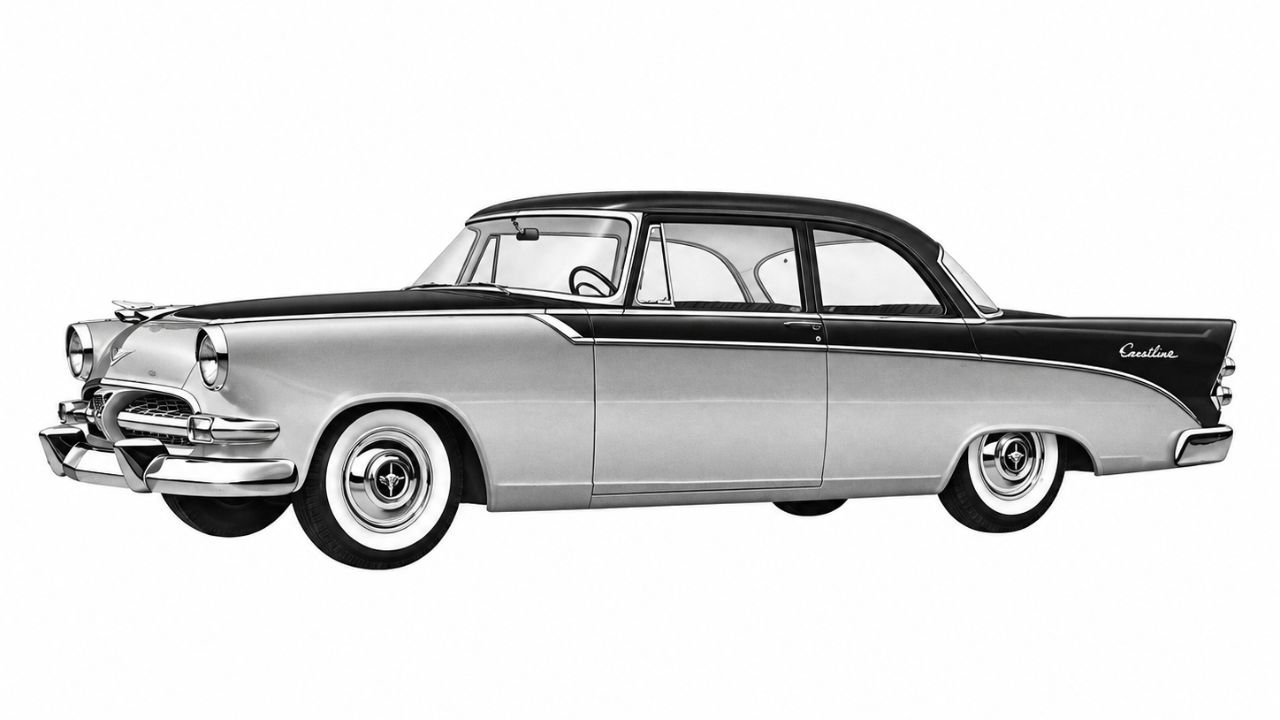
1. 1956 Dodge Coronet D-500
Dodge’s D-500 package started on just three bodies, and one of them was the most basic: the Coronet two-door sedan. The other two were the Royal Lancer hardtop and convertible. Later, Hooniverse notes, the package could be ordered on any Dodge body style.
It was far more than an engine option. The D-500 brought a 315-cubic-inch Hemi-head V8 with a four-barrel Carter carburetor, larger valves, mechanical lifters and 9.25:1 compression, good for 260 horsepower and 330 lb-ft. Dodge added heavy-duty suspension and bigger brakes borrowed from the New Yorker and Imperial. For NASCAR, a rare D-500-1 version raised output to 285 horsepower.
How many Coronet two-door sedans got the package is not documented in the sources we found.
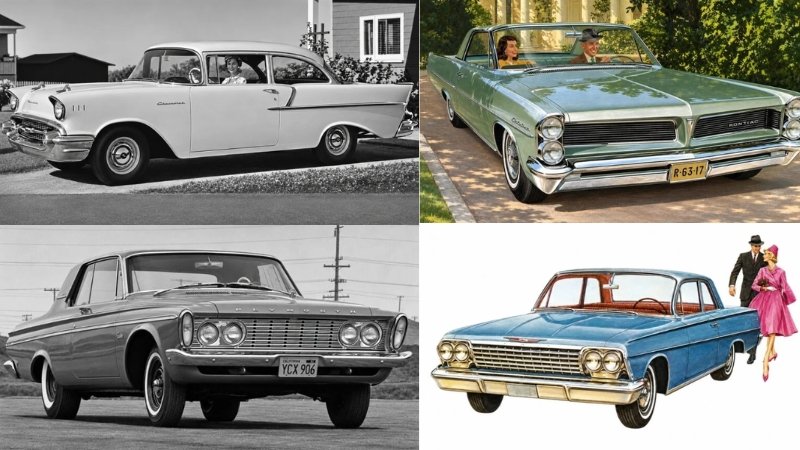
2. 1957 Chevrolet 150
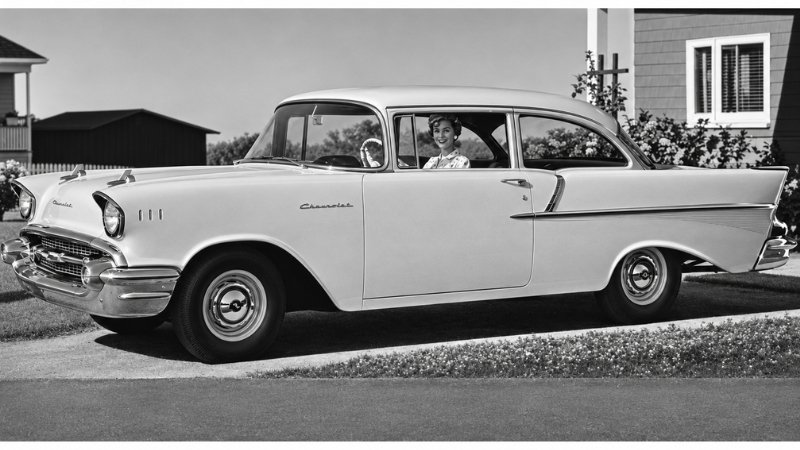
The 150 was Chevrolet’s economy and fleet car, the cheapest of the Tri-Five line. It was also, according to Wikipedia, theoretically available with every engine Chevrolet offered for 1957, up to the 283-cubic-inch V8 with Rochester Ramjet fuel injection and 283 horsepower.
The most famous result never came off a showroom floor. The “Black Widow” was a 150 utility sedan prepared by SEDCO in Atlanta with backing from Chevrolet Engineering, according to Chevy Hardcore. The 150 was chosen because it was the lightest sedan Chevrolet built: two doors, no back seat, fixed rear windows. Black Widows won 16 NASCAR Grand National races in 1957, ten of them with Buck Baker, who took the championship. NASCAR banned fuel injection during that season, and the cars switched to four-barrel carburetors.
3. 1957 Ford Custom 300
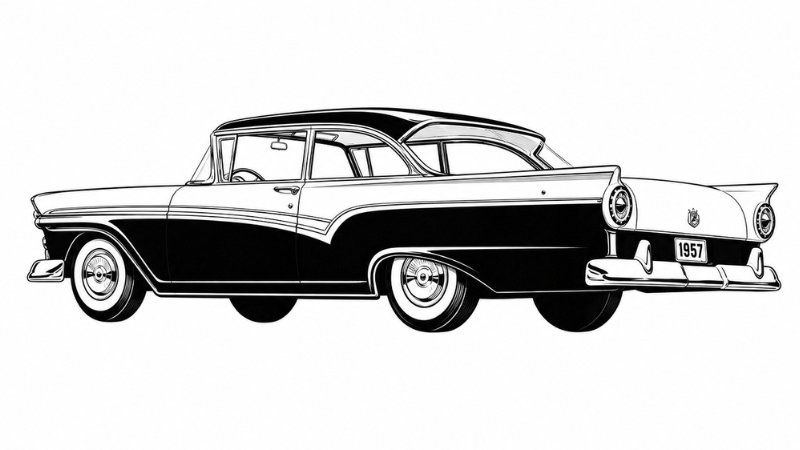
The Custom 300 was Ford’s plain short-wheelbase sedan for 1957, a two-door or four-door on a 116-inch wheelbase. On paper, it could get the wildest engine of Ford’s year: the F-code, a 312-cubic-inch V8 with a McCulloch-Paxton supercharger and 300 horsepower. RM Sotheby’s notes that Ford advertised the option as available in any series, though most superchargers went into Thunderbirds.
Cars with the F-code carried “Police Interceptor” lettering on the glove box, according to Wikipedia. The E-code, with two four-barrel carburetors and 270 or 285 horsepower, was also offered on all body types.
How many Custom 300s actually received an F-code is not recorded in our sources. For reference, an F-code Fairlane 500 sold for $60,500 at RM Sotheby’s Hershey auction in 2014.
4. 1957 Pontiac Chieftain
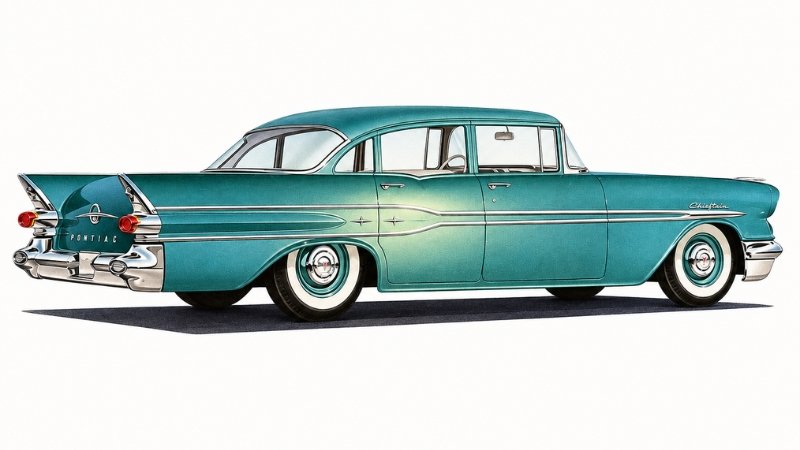
The Chieftain was Pontiac’s entry-level line for 1957, on the shorter 122-inch wheelbase. With a manual transmission, it came standard with a two-barrel 347 V8 rated at 227 horsepower.
Then came the options. Over-Drive Magazine lists the Tri-Power 347, with three two-barrel carburetors, at 290 horsepower with Hydra-Matic, and two “Extra Horsepower” Tri-Power versions at 317 horsepower with any transmission. All three were available across the line, including the Chieftain. The fuel-injected 347 started out as a Bonneville-only engine and was later extended to all models.
Buyers took to the Chieftain in large numbers. Over-Drive lists 51,017 two-door hardtops and 21,343 two-door sedans alone, though it does not say how many had Tri-Power.
5. 1962 Chevrolet Biscayne 409
By 1962, the Biscayne was Chevrolet’s least expensive full-size car. Wikipedia notes that it had held that spot since the Delray was dropped after 1958. It was also the lightest way to carry Chevrolet’s new 409.
In its top form, the 409-cubic-inch W-engine had two four-barrel Carter carburetors, an aluminum intake, a high-lift cam and a 409-horsepower rating, one horsepower per cubic inch. Sports Car Market, profiling a restored Biscayne 409/409 drag car, notes that only 18 cars received factory aluminum front sheet metal. That Biscayne sold for $95,400 at Mecum’s Dallas auction on September 7, 2012.
Street Machine points out that Chevrolet’s racers often preferred the Bel Air “bubbletop” for its looks, even though the Biscayne two-door sedan was slightly lighter. Don Nicholson won the 1962 NHRA Winternationals in a 409, and Hayden Proffitt took the NHRA Stock Eliminator title.
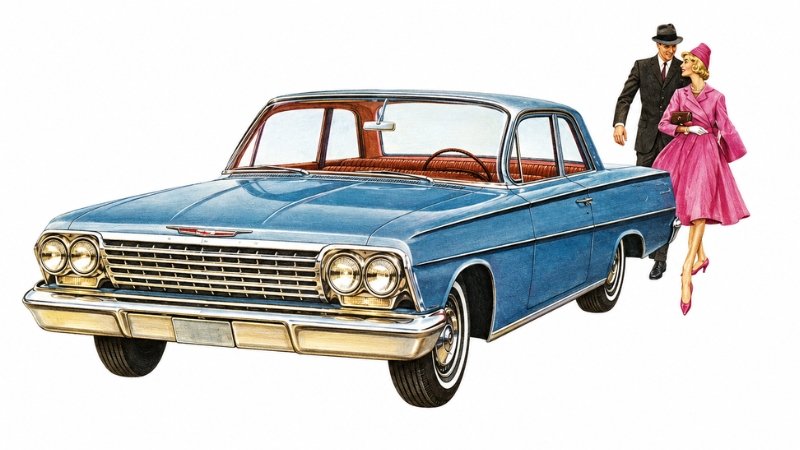
6. 1962 Plymouth Savoy Super Stock 413
The Savoy had been Plymouth’s entry-level full-size car since 1959, according to Wikipedia. For 1962, Chrysler shrank its Plymouths and Dodges onto a new, lighter B platform, and that made the cheapest Savoy two-door an obvious starting point for drag racers.
Midway through the year, Plymouth added the Super Stock 413, part of Chrysler’s new “Max Wedge” program. It came with 11.0:1 compression and 410 horsepower or 13.5:1 compression and 420 horsepower. MaxWedge.com, which documents these cars, notes that the package was available in every 1962 Plymouth B-body except the wagons, from the Savoy up to the Sport Fury. Dodge sold the same engine as the Ramcharger 413.
The numbers were tiny. Wikipedia’s Max Wedge article lists 298 Plymouths for 1962, while its Savoy article gives 289.
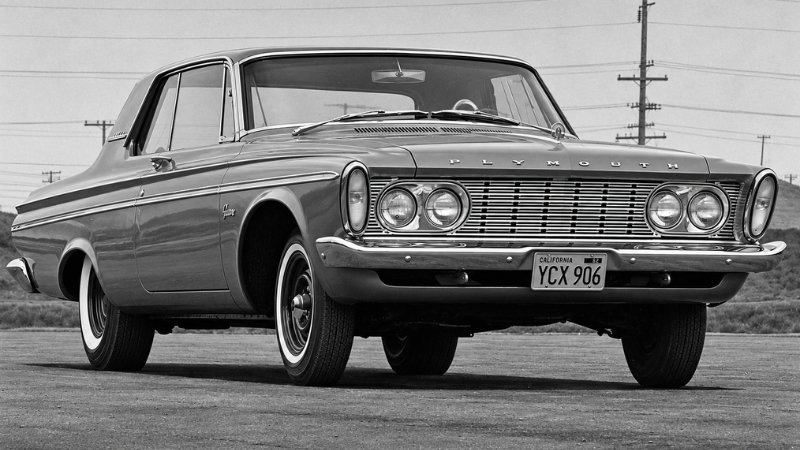
7. 1962 Pontiac Catalina Super Duty
Pontiac’s Super Duty 421 is the clearest case of an engine that cost almost as much as the car. Autoevolution notes that the option was priced at $2,250, against $2,725 for a base Catalina (1962 dollars).
For that, buyers got a four-bolt block, a forged-steel crankshaft and rods, forged-aluminum pistons and two four-barrel carburetors on an aluminum intake. The official rating was 405 horsepower at 5,600 rpm, with 425 lb-ft. Many 1962 Super Duty cars also had aluminum fenders, inner fenders, hood, radiator support and front bumper, saving nearly 200 pounds, according to PontiacV8.com.
How many were built depends on the source. PontiacV8.com counts 155 Catalinas and 16 Grand Prix. Autoevolution estimates 177 Catalinas and notes that other sources put the figure at about 130. Early in 1963, GM ordered its divisions out of factory-backed racing.
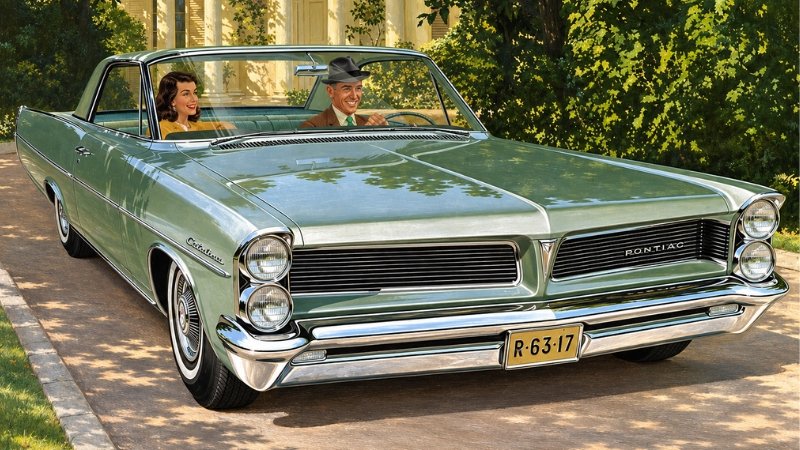
8. 1963 Ford 300 R-Code
For 1963, the Ford 300 was the no-frills full-size Ford, sold mostly to fleets and police departments. Barn Finds notes that, underneath, it was essentially a Galaxie, and it could take the same engines.
That included the R-code 427, rated at 425 horsepower and 480 lb-ft, usually paired with a four-speed manual. Barn Finds puts the number of 300s built as factory race cars with the 427 at roughly 50. One surviving example was offered on Craigslist in West Virginia in December 2020 for $80,000. That was an asking price, not a sale, and the seller’s claims included an engine that was largely original and about 3,500 miles since restoration.
Why Detroit Built Them
The reasons were partly practical. Racing rules in NASCAR and the NHRA favored production cars, and the lightest, cheapest bodies made the best starting point. A two-door sedan without carpet or a radio weighed less than a hardtop with every option.
For ordinary buyers, the appeal was simpler. A plain sedan with a big engine did not look like anything special, and that was exactly the point.