On July 7, 1959, Ford photographed a prototype compact station wagon with large EDSEL letters on its side. Four months later, the Edsel brand was dead. The car was not.
It reached showrooms on March 17, 1960, under a different name: Comet. It had no Edsel badge and, for its first two years, no Mercury badge either. And in a model year that lasted only from March to October, it found 116,331 buyers. By Thomas Bonsall’s count in his book Disaster in Dearborn, that was more than the 110,810 Edsels built in three model years combined. Wikipedia, which includes Canadian assembly, puts the Edsel total higher, at 118,287.
An Edsel Until the Last Minute
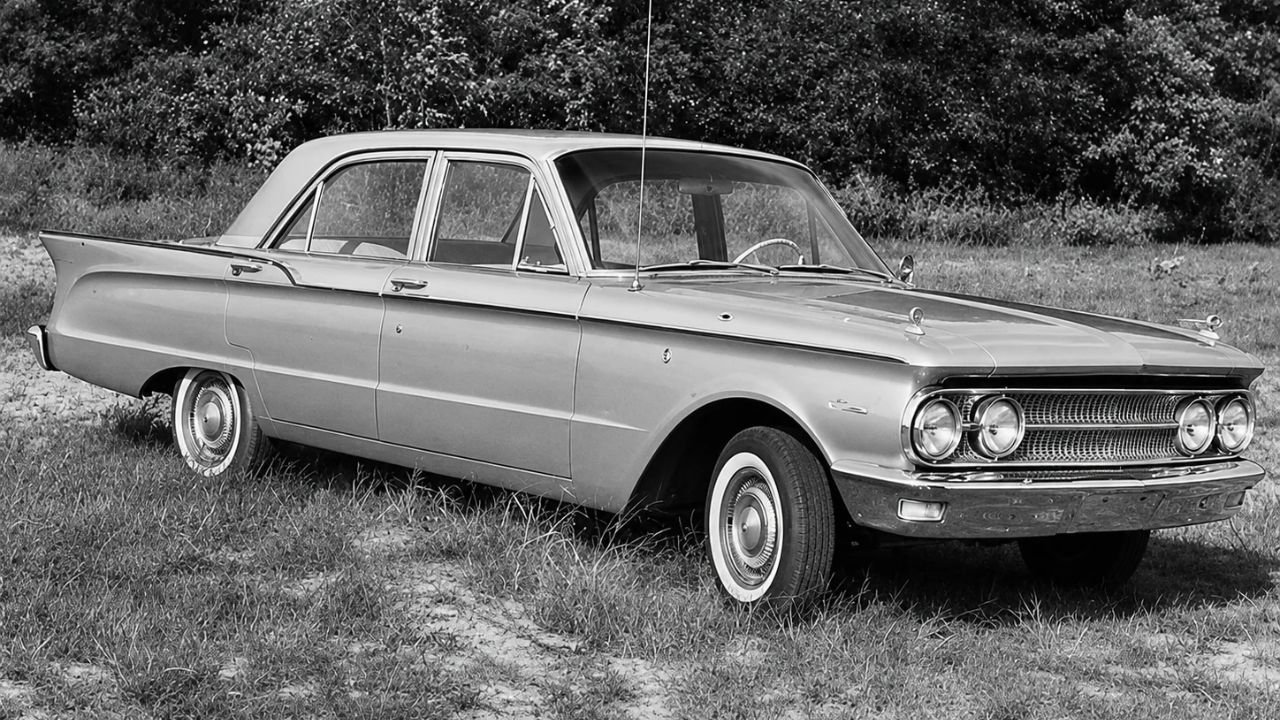
The Comet began as an upscale compact for the Edsel division. The history site The Makes That Didn’t Make It calls the project the Edsel B. Curbside Classic, which has collected the prototype photos, shows clay models and test cars in several versions, with dual and quad headlights, a narrowed version of the Edsel’s horse-collar grille and a split grille. According to Wikipedia, pre-production sedans still wore the split grille before it was replaced by a Mercury-style front for launch.
Then the plan collapsed. Ford announced the end of the Edsel on November 19, 1959. The compact was too far along to scrap, so Ford moved it to the Lincoln-Mercury dealers and gave it a name of its own.
Edsel Parts in Plain Sight
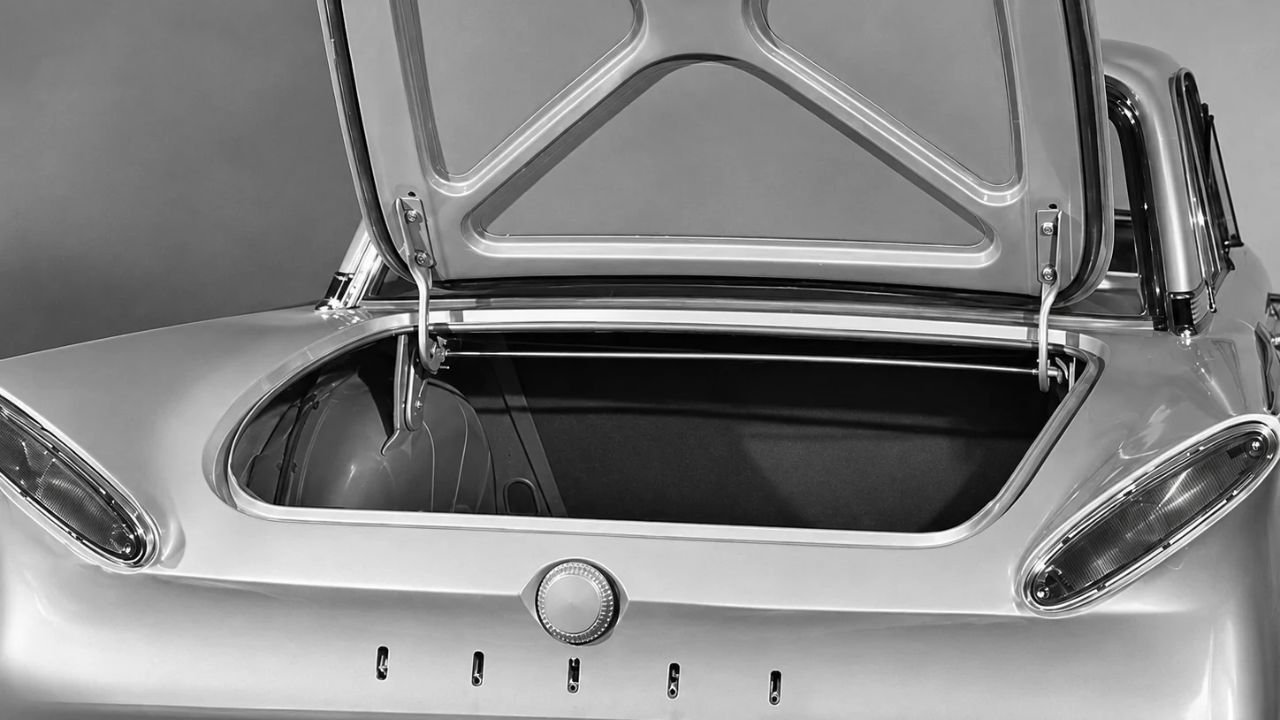
Ford removed the badges. It did not remove everything else. The canted, oval taillights came from the Edsel prototype and, according to Wikipedia, carried Edsel part numbers, although the lenses differed in size. The parking lights and the dashboard knobs came from the 1959 Edsel parts bin, and Mac’s Motor City Garage points out that the instrument panel closely followed the 1959 Edsel cluster.
The most telling detail was in the owner’s pocket. The Comet used Edsel-style keys with the middle bar of the “E” removed, turning it into a “C.”
A Falcon in a Better Suit
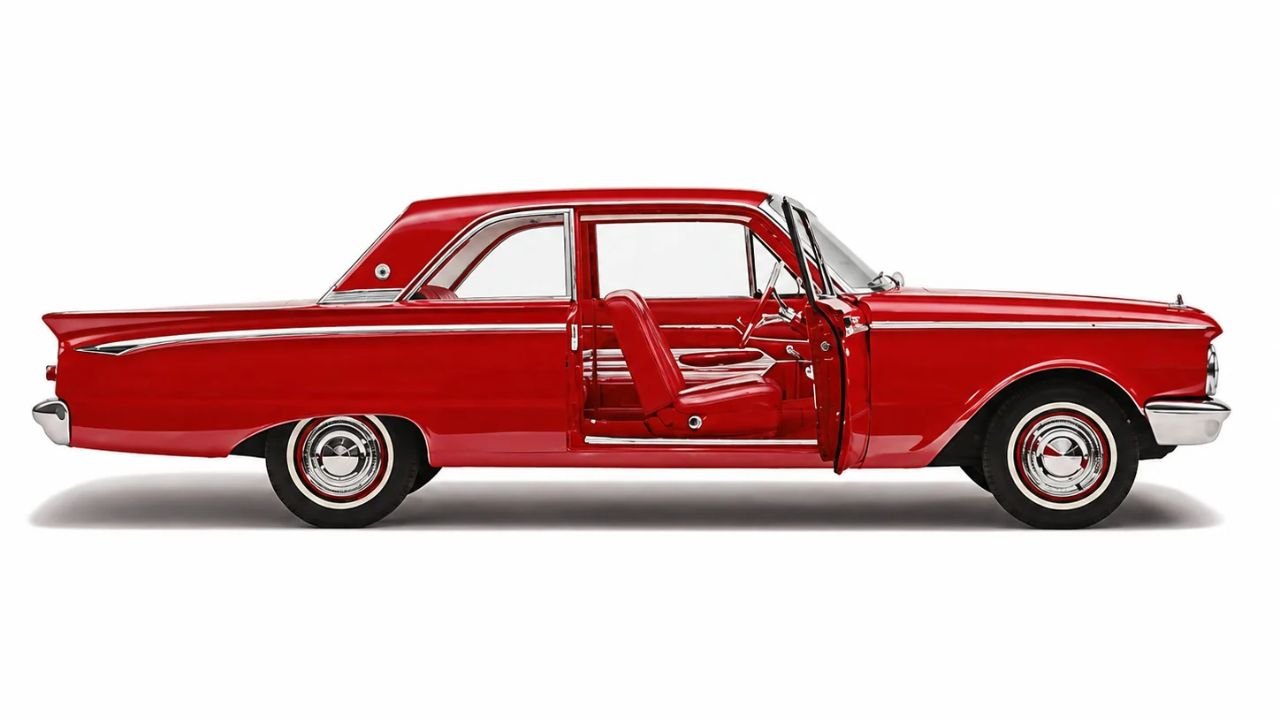
Underneath, the Comet was a Ford Falcon, stretched and dressed up. The sedans rode a 114-inch wheelbase, against 109.5 inches for the Falcon. The wagons kept the Falcon’s shorter 109.5-inch chassis. Overall length was 194.5 inches. Lincoln-Mercury advertised it as “the First Compact Car with Fine Car Styling,” and The Makes That Didn’t Make It notes it was marketed as a “senior compact.”
The engine was pure Falcon: a 144-cubic-inch Thriftpower inline six with a one-barrel Holley carburetor. Wikipedia and Mac’s Motor City Garage list it at 90 horsepower at 4,200 rpm, while Conceptcarz and some other sources give 85. A column-shifted three-speed manual was standard, and a two-speed automatic called Comet-Drive was optional.
The lineup was simple: two-door and four-door sedans, two-door and four-door wagons, in standard and Custom trim. The Custom added extra chrome, badges and an all-vinyl interior.
The Name on the Door
The branding was unusual. For 1960 and 1961, the Comet was not a Mercury. It was sold through dealers signed as Lincoln-Mercury-Comet or Mercury-Comet, and the VIN tag on the door read “Made in U.S.A. by Comet.” Wikipedia notes that 1960 and 1961 Comets are still often mislabeled as Mercury Comets today.
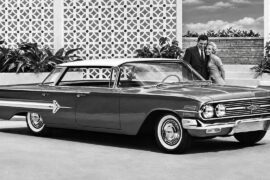
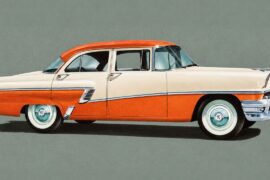
Ford’s rivals faced the same question that year. Chevrolet sold the Corvair as a Chevrolet. Chrysler first launched the Valiant as a separate make. Ford’s Comet ended up somewhere in between: a brand of its own on paper, sold by a dealer network that belonged to another one.
The Numbers Nobody Expected
The short 1960 model year produced 116,331 Comets. Four-door sedans led with 47,416, followed by 45,374 two-door sedans, 18,426 four-door wagons and 5,115 two-door wagons.
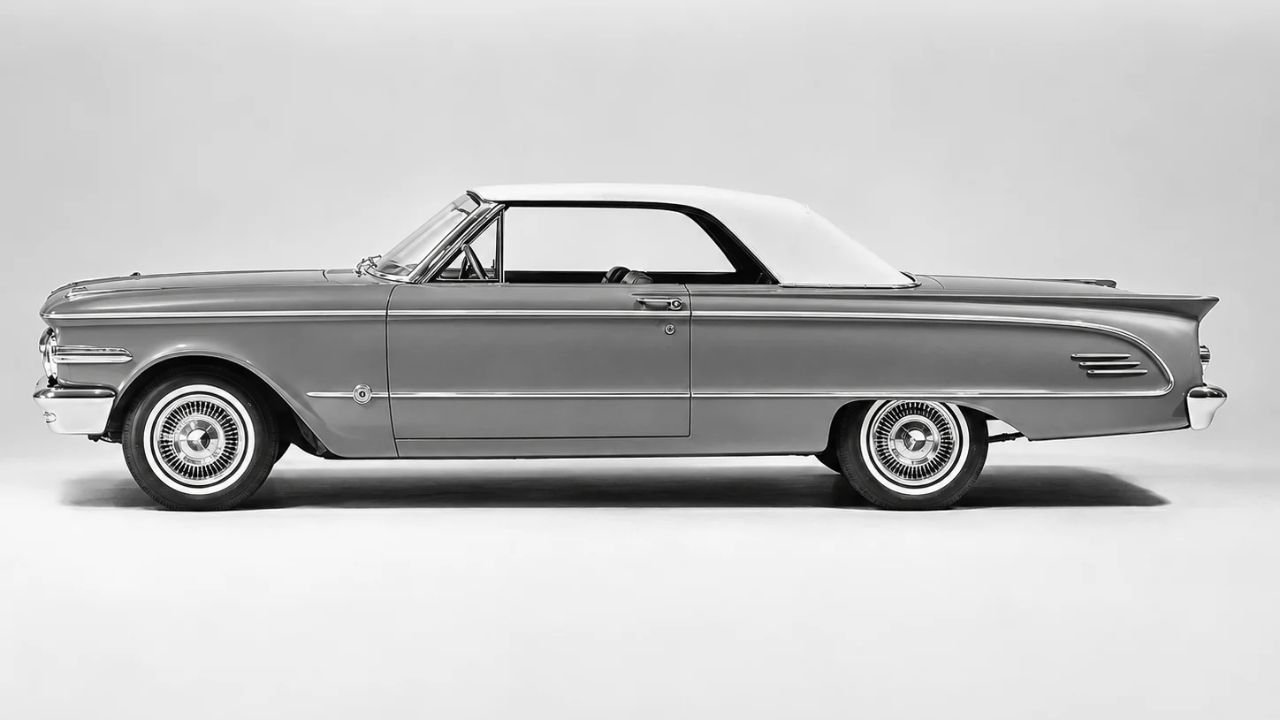
For 1961, the first full year, Wikipedia lists 197,263 cars. The Makes That Didn’t Make It gives a lower figure of about 183,000. Either way, sales rose sharply, and Wikipedia notes that the Comet outsold Mercury itself by about 70 percent that year. The Makes That Didn’t Make It puts it more strongly, saying the Comet sold about 40,000 more cars than Mercury and Lincoln combined.
1961: More Power, Bucket Seats
Buyers complained about the 144, so Ford added an option for 1961: the 170-cubic-inch six with 101 horsepower at 4,400 rpm. A four-speed manual joined the options list. The grille was redesigned, and the Comet script moved from the front fender to the rear quarter.
In the spring of 1961 came the S-22, a two-door sedan with all-vinyl bucket seats, a center console, deluxe armrests, full wheel covers and narrow whitewalls. Conceptcarz says it was patterned after the Chevrolet Corvair Monza and cost $284 more than a standard Comet two-door (1961 dollars). The mechanical parts were the same as on any other Comet. It still sold 14,004 copies in its first year.
From Separate Brand to Mercury
The experiment did not last. On September 20, 1961, Lincoln-Mercury announced that Comet and Mercury would be combined. From 1962, every Comet was a Mercury Comet, the Comet-Drive automatic became Merc-O-Matic, and the name stayed in the Mercury lineup through 1977. In Canada, the Comet replaced the one-year Frontenac, a rebadged Falcon, for 1961.
Cheap to Buy Today
The early Comet has never been an expensive classic. Conceptcarz lists several concluded 1961 Comet sales at Mecum auctions, including a sedan that sold for $3,850 in Chattanooga in 2023 and a car that brought $19,800 in Dallas in 2021. A 1961 wagon sold for $6,000 at Mecum Seattle in 2014. The listings come from an aggregator, so the condition behind each figure is not documented.
That leaves an odd footnote in Detroit history. Ford spent heavily to launch the Edsel and lost. The compact it nearly cancelled with it, wearing Edsel taillights and Edsel keys, outsold the Edsel’s entire run, by Bonsall’s count, in its first seven months.