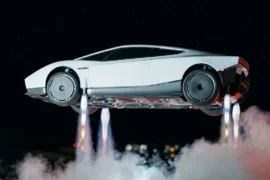
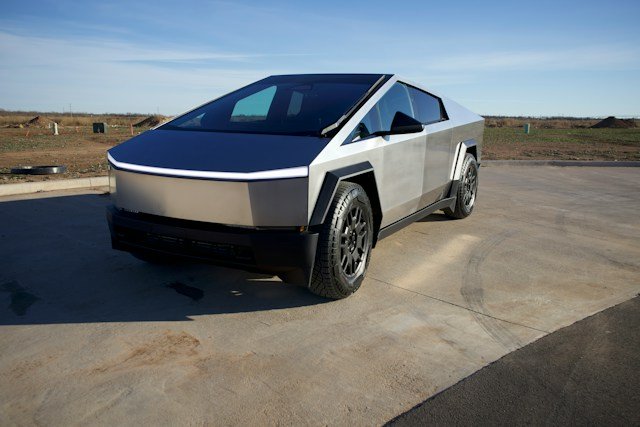
Tesla will stop building the Cybertruck at Gigafactory Texas around the middle of 2027. Elon Musk announced the plan on X late on Thursday, November 5, saying the space was needed to build more Cybercabs, the company’s two-seat robotaxi. When the line stops, the stainless-steel pickup will have been in production for about three and a half years.
What Musk Announced
According to Fox Business, Musk wrote that Tesla would wind down Cybertruck production in Austin to free capacity for the Cybercab. Replying to another user, he called the Cybertruck the “best vehicle Tesla has ever made” and described the decision as the end of an era.
He did not say whether the truck would be built somewhere else. Fox Business points out that the Austin plant is the only Tesla factory known to be equipped for it, and that it was not immediately clear whether production would move or simply end.
Wes Morrill, the Cybertruck’s lead engineer, responded on X. He called the truck an incredible technology development platform that lives on through the Cybercab, and he added that Tesla will keep supplying spare parts and service, Not a Tesla App reports.
From the Smashed Window to Deliveries
The Cybertruck was unveiled in 2019, and at the time Tesla promised a lot. The Drive lists the announced prices as $39,900 for the single-motor version, $51,100 for the dual-motor and $71,100 for the tri-motor, along with up to 500 miles of range and 14,000 pounds of towing. Autoevolution notes that reservations passed one million after the unveiling.
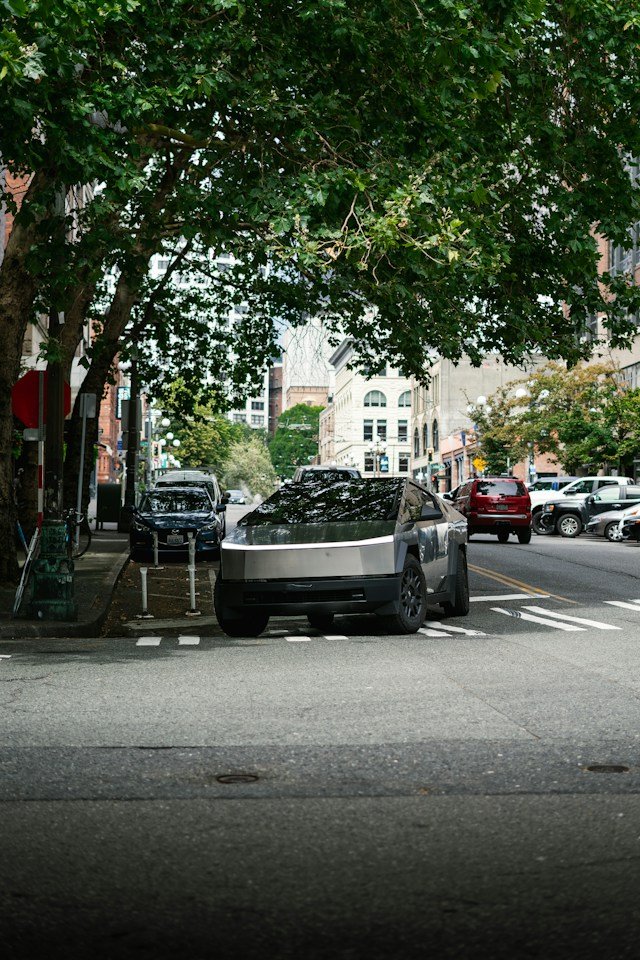
The first trucks were handed over at a delivery event on November 30, 2023. By then, the numbers had changed. The Drive gives the launch prices as $60,990 for the rear-wheel-drive version, $79,990 for all-wheel drive and $99,990 for the tri-motor Cyberbeast, before delivery fees. Peak range was 340 miles, or about 470 with an optional battery mounted in the bed. Towing was rated at 11,000 pounds and payload at 2,500.
Pricing kept moving after that. Not a Tesla App reports that a dual-motor all-wheel-drive version launched in February 2026 at $59,990, rose to $69,990 about ten days later and was raised by another $5,000 in August. The cheapest Cybertruck now costs $74,990.
The Sales Gap
Musk had predicted that Tesla would sell 250,000 Cybertrucks a year once production was up to speed. The actual numbers came nowhere close.
Tesla does not break out Cybertruck deliveries. It reports them under “Other Models,” a category that also includes the Semi and, until recently, the Model S and Model X. Kelley Blue Book estimates, cited by Fox Business, put US Cybertruck sales at 38,965 in 2024 and 20,237 in 2025, a drop of 48 percent. Autoevolution writes that Tesla has sold fewer than 30,000 Cybertrucks in any year since 2024, including trucks bought by Musk’s other companies, such as SpaceX.
The quarterly figures for 2026 are no clearer. Not a Tesla App reports 12,364 “Other Models” deliveries in the second quarter, against more than 467,000 Model 3 and Model Y. Autoevolution cites 8,295 in the third quarter, a figure that now also includes the Cybercab.
The truck has also been recalled often. Fox Business counts 11 Cybertruck recalls recorded by the National Highway Traffic Safety Administration since 2023. Some needed physical repairs, while others were fixed with over-the-air software updates.
Tesla had already given up on one market. In a report published on October 25, Autoevolution wrote that the company had told reservation holders in Australia and New Zealand that the right-hand-drive Cybertruck had been cancelled and their deposits would be refunded.
Why the Cybercab Gets the Space
The Cybercab is a two-seat robotaxi built for Tesla’s driverless ride service. According to Fox Business, it entered production earlier in 2026, and Tesla lists an installed capacity of more than 125,000 units a year. Paid rides began with a small fleet in Austin in September, and a Dallas launch is planned for December.
Texas DMV figures cited by Fox Business show about 570 Cybercabs among more than 1,200 Tesla robotaxis registered in the state, most of the rest being Model Ys. The program is also under scrutiny. In September, NHTSA opened an audit into whether Tesla properly self-certified the Cybercab to federal safety standards.
Not a Tesla App notes that the Cybercab uses several technologies that first appeared on the Cybertruck, among them the 48-volt low-voltage system, steer-by-wire and Tesla’s Etherloop wiring. Tesla reportedly added a second production shift for the Cybercab at Giga Texas, the same site.
What Happens to Owners
For people who already own a Cybertruck, the practical change is limited for now. Production continues until around mid-2027, and Morrill says parts supply and service will continue afterward. Tesla has not announced a successor, and Autoevolution’s suggestion that the design could return as a full-size SUV is speculation.