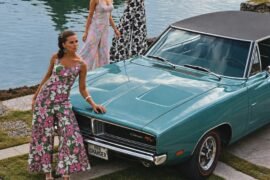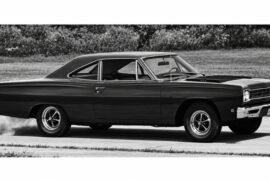
In February 1982, Buick announced a two-tone Regal named after NASCAR’s top series. It had a 125-horsepower V6, and only about 16 of the 215 built had a turbocharger. Five years later, the same name stood on an all-black coupe that could outrun a Corvette, and its final version, the GNX, ran 0 to 60 mph in 4.7 seconds. Few American cars changed character that completely in such a short time.
A V6 Nobody Wanted
The story starts with an engine Buick had once given away. Ate Up With Motor, the automotive history site by Aaron Severson, writes that Buick’s Fireball V6 appeared in 1962, that the tooling was later sold off, and that Buick bought it back from AMC in 1974. For 1975, the revived engine grew to 231 cubic inches.
Buick then added a turbocharger. A 1976 Indianapolis pace car showed what was possible, and production turbo V6s arrived for 1978 with 150 or 165 horsepower, according to Ate Up With Motor. Lloyd Reuss, then Buick’s chief engineer, was the driving force behind the program. GNTType.org, which documents the turbo Regals, counts 30,507 turbo Regal Sport Coupes for 1978. Sales fell after that, to 2,891 in 1981.
The Name From the Racetrack
Buick’s Regals were winning in NASCAR at the time. Ate Up With Motor notes that Darrell Waltrip won the 1981 and 1982 driver’s titles in Regals, Bobby Allison won the 1982 Daytona 500 and the 1983 championship, and Buick took the manufacturers’ title three years in a row from 1981 to 1983.
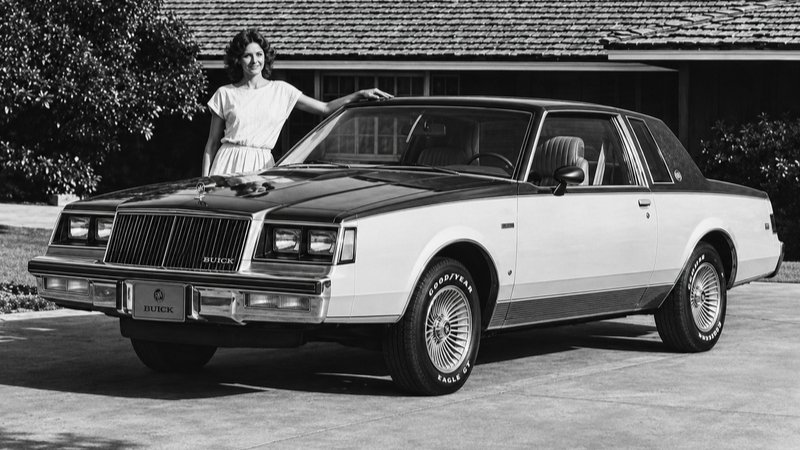
The first Grand National was a celebration of that run. Buick announced it about a week before Allison’s Daytona 500 win in February 1982, as a trim package. The cars wore black-over-silver two-tone paint applied by Cars and Concepts in Ann Arbor, Michigan. The standard engine was a 252-cubic-inch V6 rated at 125 horsepower.
The turbo engine was available, but almost nobody ordered it. GNTType.org lists 215 Grand Nationals for 1982 and says only 16 are believed to have been turbocharged. Ate Up With Motor gives 15 or 16. There was no Grand National for 1983. That year, the turbo was sold in the new Regal T-Type, with 3,732 built.
Painted Black
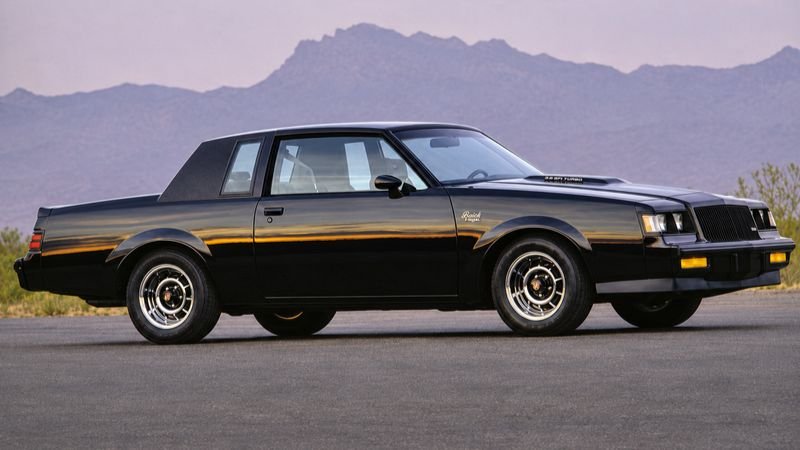
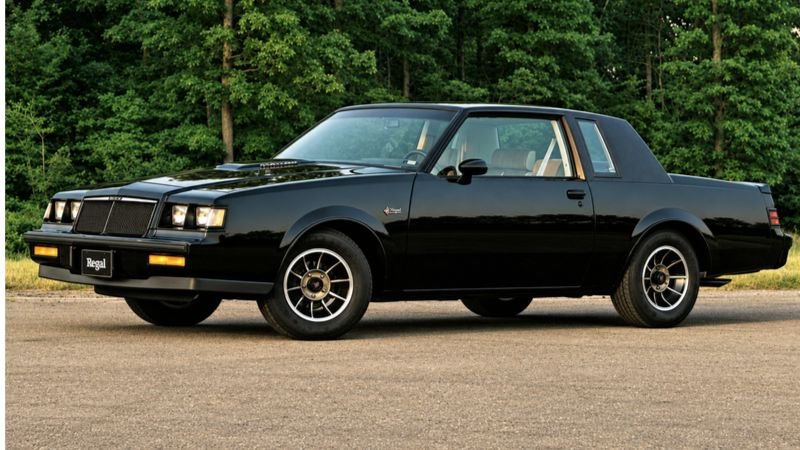
The Grand National came back for 1984 in a very different form. It was now a $1,282 appearance package on the T-Type, offered only in black, according to Ate Up With Motor. The turbo V6 had sequential fuel injection and 200 horsepower, with a four-speed automatic and a 3.42 axle. Production was limited to 2,000.
The look gave the car its reputation as much as the engine did. The Drive notes that several journalists who reviewed it when new said it looked as if Darth Vader had designed a car. In Car and Driver’s test, cited by Ate Up With Motor, the 1984 car ran 0 to 60 mph in 7.5 seconds and the quarter mile in 15.7 seconds at 87 mph.
For 1985, the cap rose slightly, and GNTType.org lists 2,102 Grand Nationals.
The Intercooler Years
The big step came for 1986. Buick added an air-to-air intercooler, and the rating rose to 235 horsepower. Ate Up With Motor calls the figure probably conservative. The Drive writes that the change cut about a second from the quarter-mile time and made the Grand National faster than a Corvette. Motor Trend recorded 0 to 60 mph in 6.0 seconds, according to Ate Up With Motor. Sales more than doubled, to 5,512.
For 1987, the rating rose again, to 245 horsepower, and demand exploded. GNTType.org lists 20,193 Grand Nationals for the year, plus 1,547 lighter Turbo T models and several thousand other Regals with the turbo engine. Production ended in December 1987. The Drive links the end to GM retiring the rear-wheel-drive G-body platform the car was built on.
The GNX
Buick wanted the car to go out with something special. Ate Up With Motor writes that engineer Dave Sharpe approached ASC/McLaren in May 1986, and that new general manager Ed Mertz approved the project after driving a prototype that August. The Drive quotes Buick’s goal as ending the Grand National with a legend.
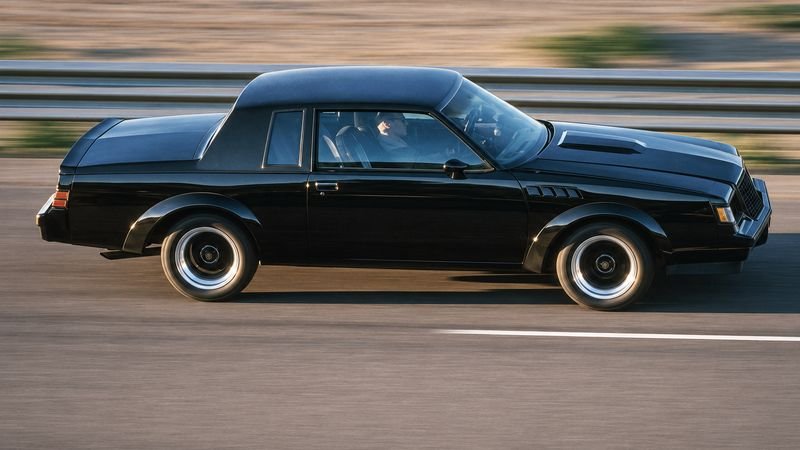
ASC/McLaren fitted a Garrett turbo with a ceramic impeller, a larger intercooler, a reprogrammed engine computer and a revised rear suspension. Fender louvers, flared wheel openings, special wheels and a Stewart-Warner gauge cluster completed the package. The official rating was 276 horsepower and 360 lb-ft. Ate Up With Motor and RM Sotheby’s both suggest the real output was around or above 300 horsepower.
The numbers backed that up. Car and Driver measured 0 to 60 mph in 4.7 seconds and the quarter mile in 13.5 seconds at 102 mph, with top speed electronically limited to 124 mph, Ate Up With Motor notes. The Drive points out that the 0 to 60 time beat the Lamborghini Countach.
Only 547 were built. Ate Up With Motor gives the sticker price as $29,900 (period figure), nearly twice the price of a regular Grand National. According to The Drive, the cars went to high-performing Buick dealers.
A Rap Album and a Super Bowl
The GNX has lately found a new audience. Kendrick Lamar named his 2024 album after it, and he opened the Super Bowl LIX halftime show in February 2025 on the hood of a car with GNX badging. RM Sotheby’s notes that it was actually a Grand National body shell, because a real GNX was too rare to use on stage.
Prices reflect the interest. At RM Sotheby’s Monterey sale in 2025, GNX number 95 of 547, showing 27,627 miles and described by the seller as well preserved, sold for $156,800. For the regular car, SlashGear cited Hagerty values in March 2023 of $68,200 for a 1987 Grand National in excellent condition and $91,600 in concours condition, each up sharply on the year before.