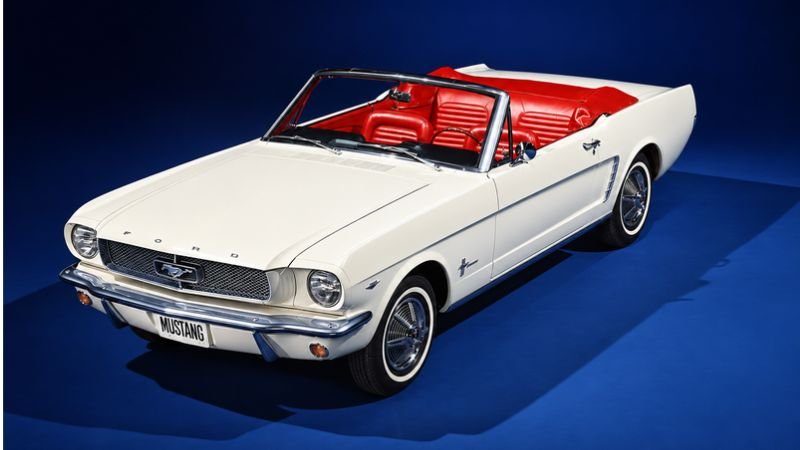
On the night of April 16, 1964, Americans watching television saw the same new car on all three networks at the same time. The next morning, Henry Ford II stood in Ford’s pavilion at the New York World’s Fair in Flushing Meadows and unveiled it.
The car was called Mustang, it started at $2,368, and about 22,000 orders came in almost at once. Depending on the source, that was the first day or the first weekend.
Few enthusiasts call it a 1965 Mustang, even though that is what it says on the paperwork. To the people who love it, it will always be the 1964½.
A Committee at the Fairlane Inn
The car began with Lee Iacocca. He had become vice president and general manager of the Ford Division in November 1960, and he wanted a car for the baby boomers who were about to start buying cars of their own.
He did not develop it at headquarters. According to The Henry Ford museum, Iacocca’s small advisory group met at the Fairlane Inn in Dearborn, about two miles from Ford’s World Headquarters, and became known as the Fairlane Committee. Their list of goals was short and specific: four seats, a usable trunk, a long hood and a short rear deck, plenty of options, less than 2,500 pounds and a base price under $2,500.
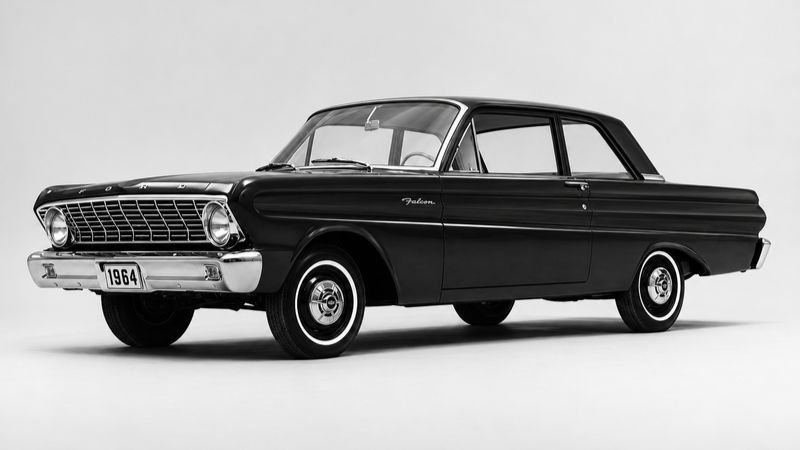
Hal Sperlich, from Ford’s special projects group, suggested building it on the compact Falcon. The Henry Ford credits that idea with saving about $400 million in development costs.
Eighteen Clay Models
The shape did not come easily. Iacocca rejected 18 clay models, The Henry Ford notes, and then set up a competition among Ford’s own studios. American Heritage writes that styling chief Gene Bordinat ran it between three studios, and that the winning design came from Joe Oros, Gale Halderman and David Ash of the Ford Division.
Henry Ford II approved the project in September 1962. He attached three conditions: a budget of $45 million instead of the $75 million Iacocca wanted, one more inch of rear legroom, and strong sales.
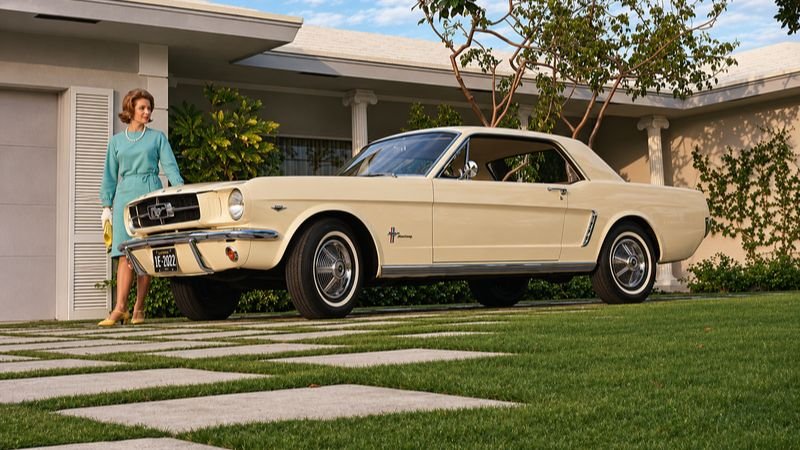
The name has two origin stories. The Henry Ford says it came from a list of animal names suggested by Ford’s advertising agency, J. Walter Thompson, with Bronco and Colt among the other candidates. American Heritage says it came from the P-51 Mustang fighter plane.
The Car You Design Yourself
The first Mustangs rolled out of Ford’s plant in Dearborn on March 9, 1964, Hagerty notes. Twelve pre-production cars went to work in a very different job: they carried visitors through the Magic Skyway, the Disney-designed ride in Ford’s World’s Fair pavilion.
The early cars came only as a hardtop or a convertible. Under the hood, the base engine was a 170-cubic-inch six with 101 horsepower. Buyers could choose a 260 V8 with 164 horsepower or a 289 with a four-barrel carburetor and 210. In June, Ford added the K-code high-performance 289, according to Hagerty.
The real secret was the order form. Ford advertised the Mustang as “the car you design yourself,” and American Heritage writes that the average buyer spent about $1,000 on options. A cheap six-cylinder coupe and a loaded V8 convertible could leave the same showroom on the same day, and both were Mustangs.
Who Bought the First One?
Even that question has more than one answer.
On April 15, 1964, two days before the official debut, a young woman named Gail Wise went shopping with her parents at Johnson Ford in Chicago. She wanted a convertible, and a salesman showed her a light blue Mustang convertible that had just arrived. Fox News reports that she may have been buyer number one, and that she was very likely the first person to drive a Mustang on a public street. Another claimant, Ron Hermann, says he committed to a car on April 8 and paid a $100 deposit, but his bill of sale has been lost.
The most famous early car went north. Ford says Captain Stanley Tucker, a 32-year-old airline pilot from Newfoundland, bought a Mustang in St. John’s during introduction week. It turned out to be serial number one, a car Ford had not meant to sell. Ford wanted it back, and Tucker finally agreed to a trade when the company built its one millionth Mustang in 1966. In exchange, he got Mustang number 1,000,001, a well-equipped Silver Frost convertible. He later said he should have put the first one on blocks and let it appreciate.
That car is now in The Henry Ford in Dearborn. Its Newfoundland license plate is still on the front bumper.

The Numbers Nobody Expected
The launch was planned like a military operation. The Henry Ford notes that Ford ran ads in 2,600 newspapers and that the Mustang and Iacocca appeared on the covers of both Time and Newsweek at the same time. Assembly lines in New Jersey and California joined Dearborn.
It worked. Ford sold 418,812 Mustangs in the first year, The Henry Ford notes, and almost 681,000 by the end of the extended 1965 model year. On March 2, 1966, less than two years after the launch, the one millionth Mustang was built, according to History.com.
American Heritage passes along the stories that came with that success: a man who supposedly drove his pickup through a showroom window, and a buyer who spent the night in a car at the dealership while his check cleared. The magazine notes that the first story was too good for anyone to bother checking.
How to Spot a 1964
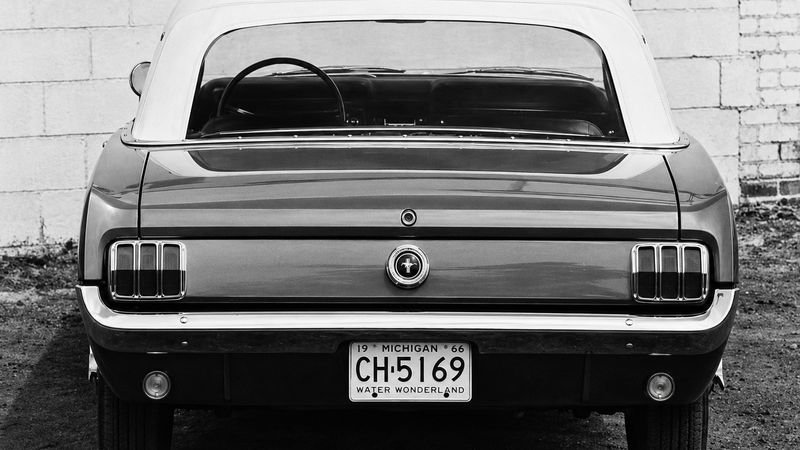
Every early Mustang is technically a 1965 model, and the VIN starts with a 5. Enthusiasts usually count cars built before August 17, 1964, as 1964½, Hagerty notes. After that date, Ford revised the engine lineup, and the fastback followed later that summer.
Hagerty’s spotter’s guide lists a few clues, with the warning that parts are often swapped over the years:
- Generator instead of alternator, with a “GEN” warning light on the dash instead of “ALT”
- Horns mounted low, on the frame rails behind the radiator
- Hood with a hanging lip at the front corners
- Gloss black hood hinges
- Door lock knobs matched to the interior color instead of chrome
- Brake light switch mounted on top of a single-reservoir master cylinder
None of these alone proves a car is an early one. Together, and with the right plant code and build date, they start to tell the story.
The Right Car at the Right Time
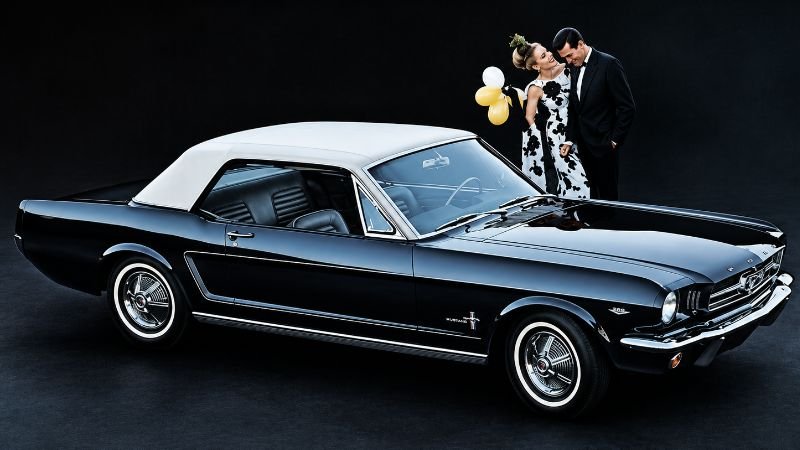
The Henry Ford’s writer sums up the success in one phrase: the right car at the right time. American Heritage adds that the Mustang gave the language a new term, the pony car.
The first one, though, was always going to be special. It was not the fastest Mustang, or the rarest, or the most expensive. It was the one that showed up on a spring night in 1964, on three channels at once, and made a lot of people want a car they had not known they needed.