Ask anyone to name an American muscle car and you will hear the same handful: GTO, Chevelle SS, Road Runner, Mustang, Camaro, Charger. They earned their reputations. But the late 1960s and early 1970s produced dozens of other cars with the same big engines and, in some cases, better numbers, and most of them never got the same fame.
“Underrated” is a judgment, so here is how this list was built. Every car on it had serious factory performance, sold in smaller numbers than its famous rivals, and stood in the shadow of a better-known model, often from its own company. Where the data exists, the market value is included too.
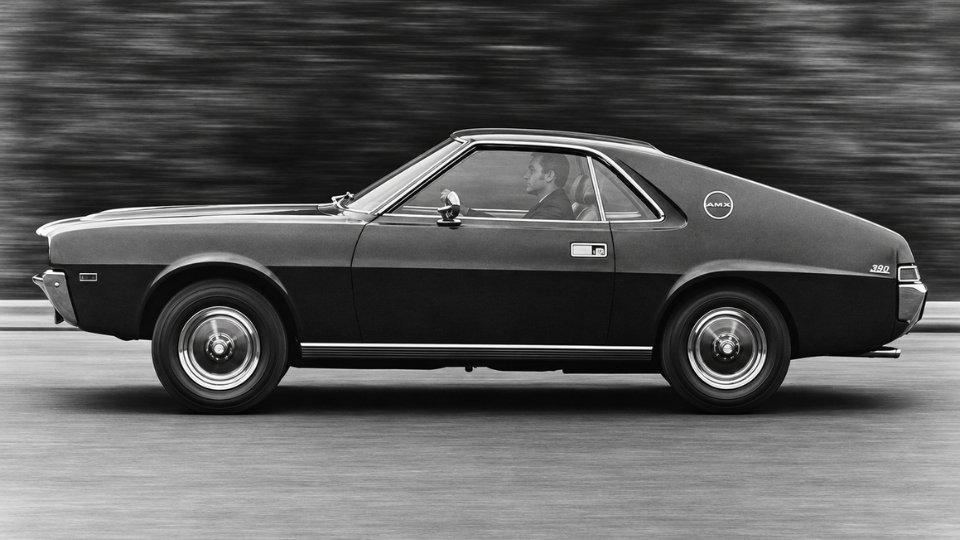
1. 1968 AMC AMX
In 1968, America had one two-seat sports car, and it was the Corvette. Then AMC cut about a foot out of its new Javelin, removed the back seat and introduced the AMX. RM Sotheby’s notes it was the first steel-bodied American two-seater since the 1957 Thunderbird.
It rode a 97-inch wheelbase, one inch shorter than the Corvette’s, and started at $3,245, more than $1,000 below the Chevrolet according to Wikipedia (1968 dollars). The top engine was a 390 V8 with 315 horsepower and 425 lb-ft. Around its launch, two specially prepared AMXs set 106 world speed and endurance records at Goodyear’s test track in Texas, with Craig Breedlove, his wife Lee and Ron Dykes driving. Wikipedia dates the runs to January 1968, RM Sotheby’s to February.
AMC built 6,725 AMXs for 1968. A restored 390 four-speed car sold for $26,400 at RM Sotheby’s Fort Lauderdale auction in 2016.
2. 1969 Mercury Cyclone CJ
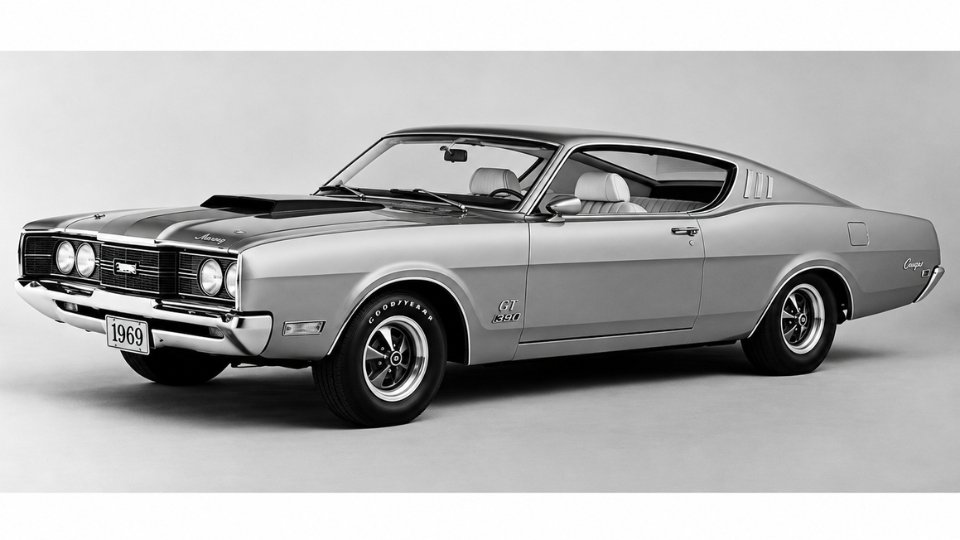
The 1969 Cyclone CJ was the Mercury version of Ford’s mid-size Cobra Jet formula, and it got lost between the Torino, the Mustang and its own Cougar sibling. Old Cars Weekly notes that Cyclones, Torinos and Cougars shared similar noses and grilles, which made the CJ easy to mistake for something else.
The standard engine was the 428 Cobra Jet, rated at 335 horsepower. It came with a four-speed manual, a competition handling package, dual exhaust, a 3.50:1 rear axle and a blacked-out grille. The price was $3,224, about $450 more than a base Cyclone with a 302 (1969 dollars).
Production is hard to pin down. Old Cars Weekly gives 3,261, a figure it also repeats elsewhere, while Barn Finds estimates no more than 2,175. Barn Finds also notes that the CJ is worth at least twice as much as a regular 1969 Cyclone, which tops out around $25,090.
3. 1969 and 1970 Mercury Cougar Eliminator
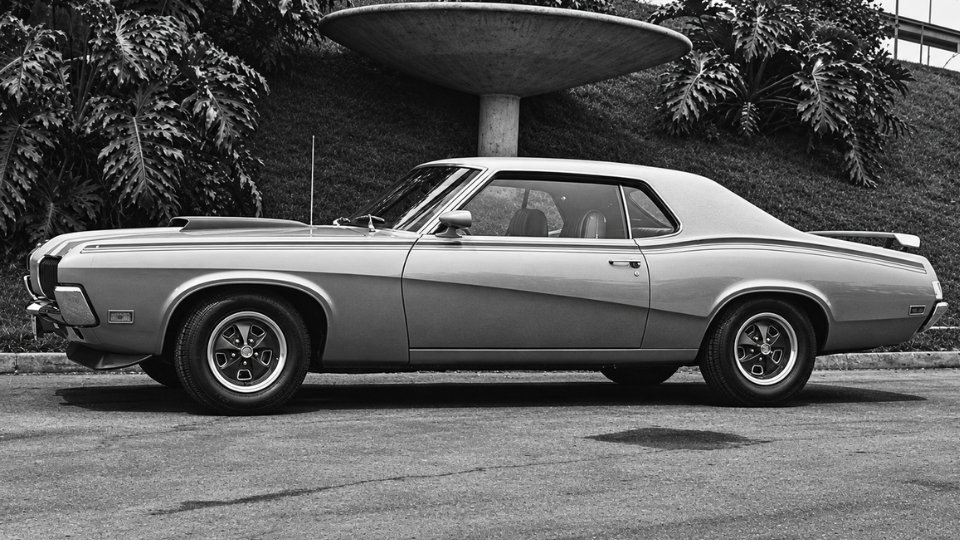
The Mustang got the Mach 1 and the Boss 302. Mercury’s answer was the Cougar Eliminator, and far fewer people remember it. Street Muscle lists 2,250 Eliminators for 1969 and 2,267 for 1970.
For 1970, the base engine was a 300-horsepower 351 Cleveland. Buyers could step up to the 290-horsepower Boss 302 or the 428 Cobra Jet, rated at 335 horsepower and 440 lb-ft. The package added a black hood scoop, front and rear spoilers, bold side stripes and front disc brakes.
The rarest combinations are not cheap. RM Sotheby’s offered a 1970 Boss 302 Eliminator at Auburn in 2016, documented by Marti Report as one of 468 Eliminators with the Boss 302, with an estimate of $150,000 to $175,000. It did not sell.
4. 1970 AMC Rebel Machine
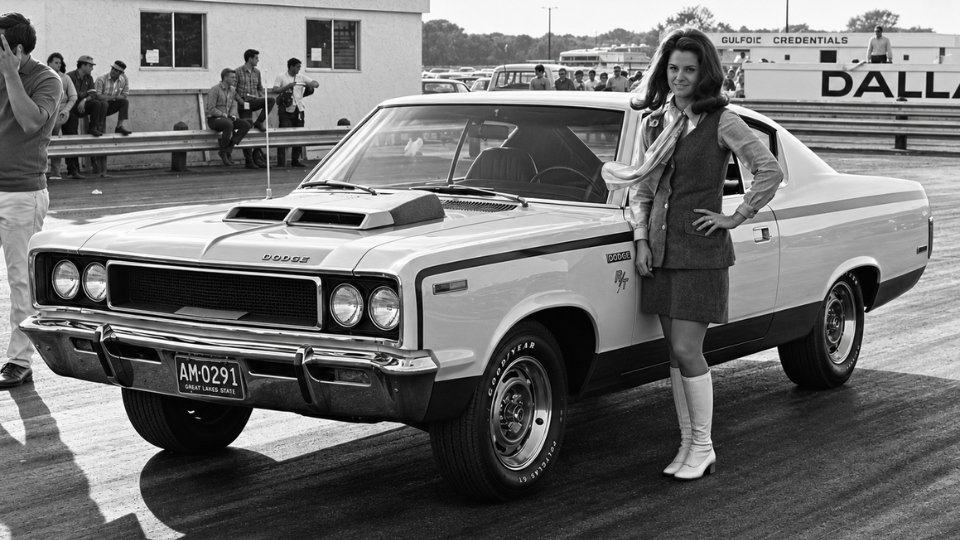
AMC’s first mid-size muscle car came out of a partnership with Hurst Performance. It debuted at a drag racing event in Dallas in October 1969, where, according to The Truth About Cars, AMC drove ten cars from the parking lot straight onto the strip.
Every Machine had the 390 V8 with 340 horsepower, 430 lb-ft and 10:1 compression. The Truth About Cars cites 0 to 60 mph in 6.4 seconds. The ram-air hood carried a tachometer built into the scoop, and the first 1,000 cars wore red, white and blue paint with reflective 3M stripes, according to ClassicCars.com. After that, buyers could choose any color.
AMC built 2,326, and the Rebel name ended with the 1970 model year.
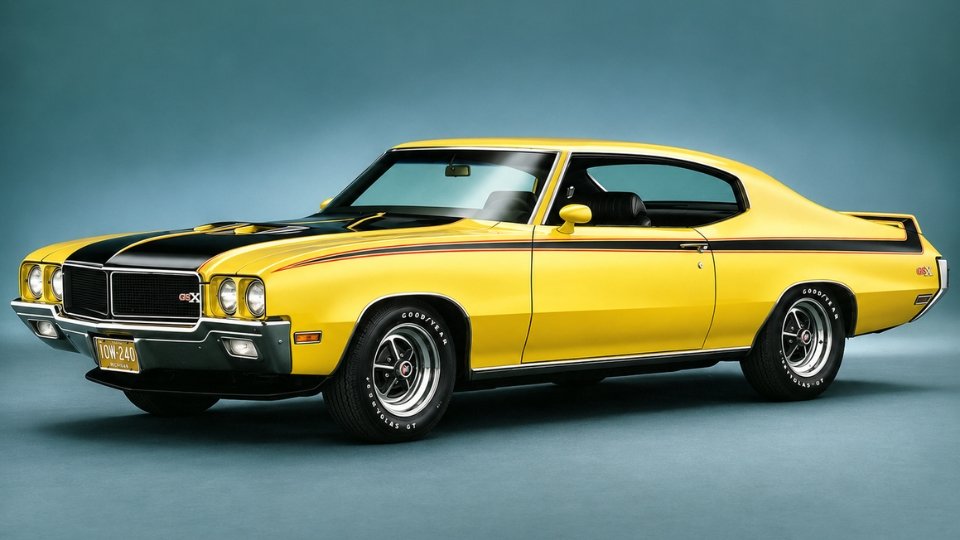
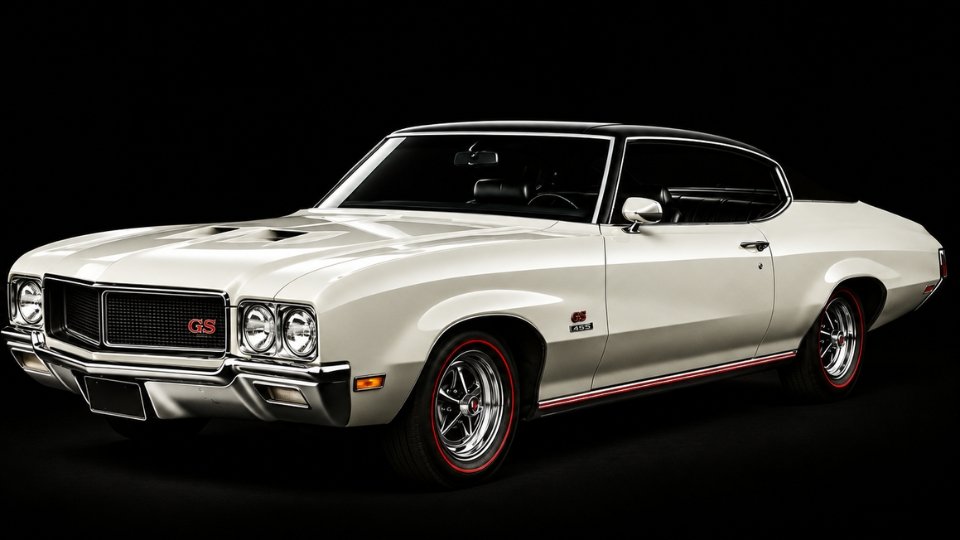
5. 1970 Buick GS 455 Stage 1
Car Guy Chronicles calls it the first “adult supercar,” and on paper it looked tame. The Stage 1 455 was rated at 360 horsepower, only ten more than the standard 455. But it carried 510 lb-ft of torque, which Car Guy Chronicles calls the highest torque rating of any 1970 performance engine.
The ratings undersold it. Before the 1970 NHRA Winternationals, the NHRA factored the Stage 1 Skylark at 400 horsepower. Motor Trend recorded a 13.38-second quarter mile at 105.5 mph, according to SlashGear. The Stage 1 option cost just $113.75 on a GSX tested by Hi-Performance CARS (1970 dollars).
The GSX version, offered only in Saturn Yellow or Apollo White for 1970, is the rarest: SlashGear lists 678 built that year. A restored 1970 GS 455 Stage 1 convertible drew a high bid of $120,000 on Hagerty Marketplace in November 2025.
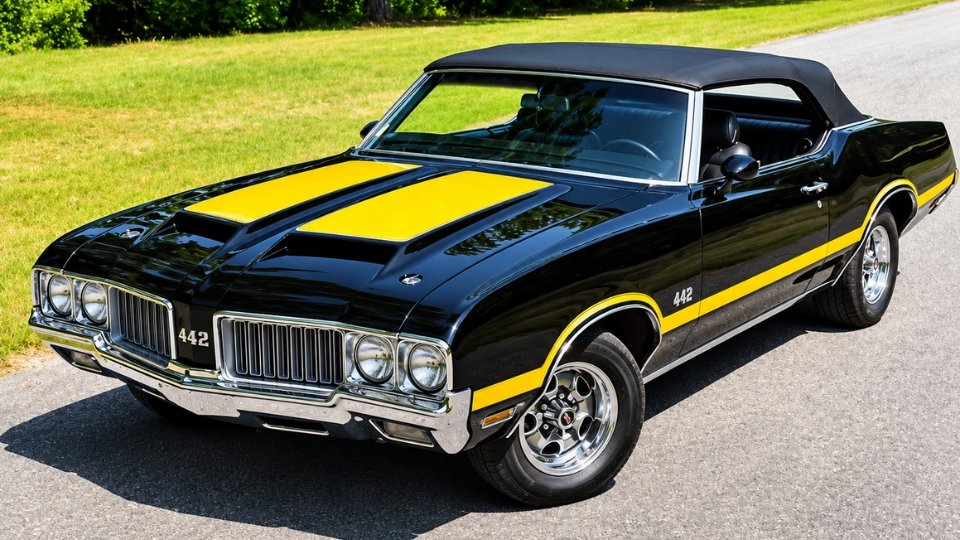
6. 1970 Oldsmobile 442 W-30
For 1970, GM lifted its 400-cubic-inch limit for intermediate cars, and Oldsmobile put its 455 into the 442. The W-30 package added a hotter cam, better heads, functional cold-air induction on a fiberglass hood, low-restriction exhaust and red inner fender liners. RM Sotheby’s lists the W-30 at 370 horsepower, and Silodrome gives 500 lb-ft of torque.
In name recognition, the 442 has long trailed the GTO and the Chevelle SS. That does not mean it is cheap. In 2022, RM Sotheby’s sold a 1970 W-30 convertible, believed to be one of 264 built, for $247,500 at Fort Lauderdale. Of all the cars here, the best W-30s are the ones collectors have already found.
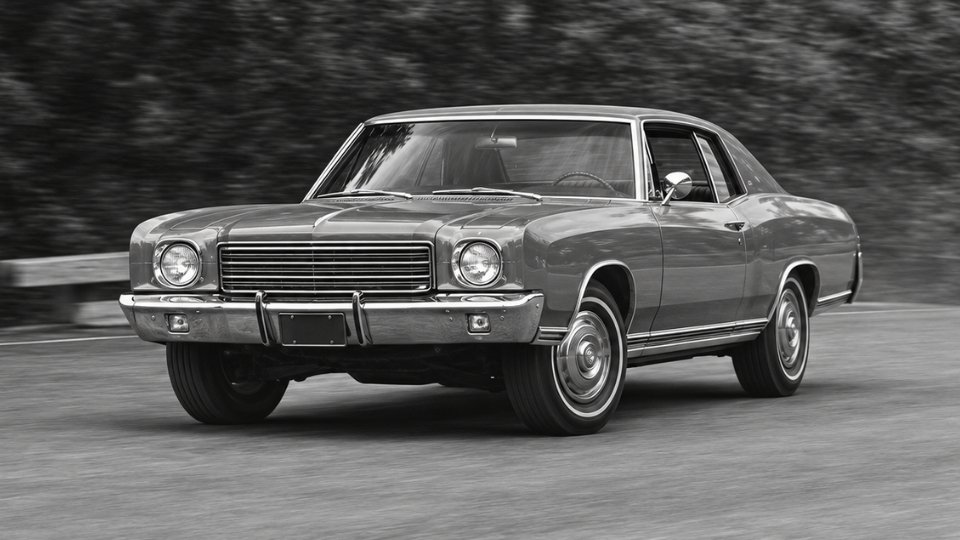
7. 1970 Chevrolet Monte Carlo SS 454
The Monte Carlo was Chevrolet’s personal luxury coupe, with a long hood and wood-grain trim. Few people expect a muscle car there. Yet the 1970 SS 454 shared its frame, engine and horseshoe shifter with the Chevelle SS 454, according to Muscle Cars Illustrated.
The SS package brought the LS5 454 V8, rated at 360 horsepower and 500 lb-ft, a Turbo Hydra-Matic, heavy-duty suspension, power front disc brakes, Positraction and dual exhaust. Motor Trend reportedly ran the quarter mile in 14.90 seconds at 92 mph in late 1969.
Chevrolet built 3,823 Monte Carlo SS 454s for 1970. Production fell to 1,919 for 1971, a drop the same source links to the UAW strike at the start of that model year.
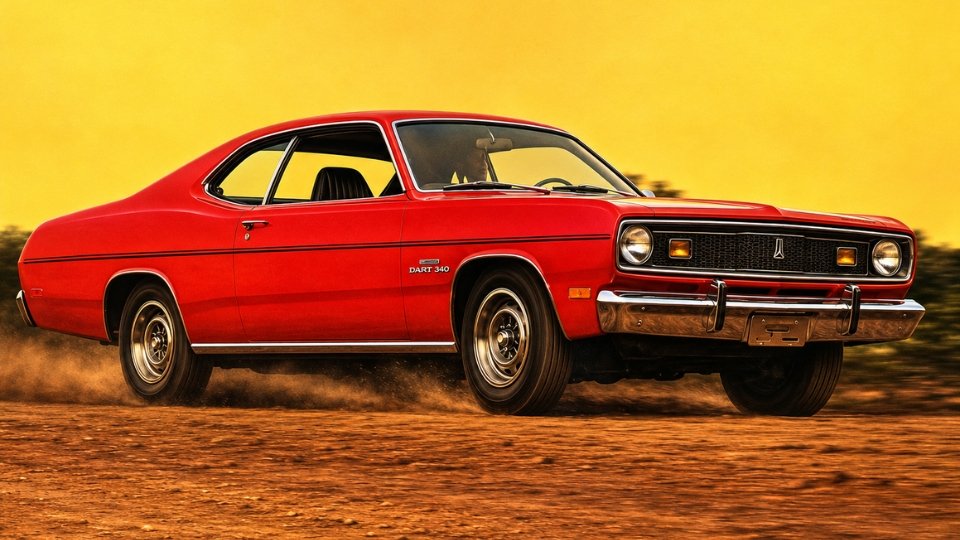
8. 1970 Plymouth Duster 340
The Duster was a compact built on the Valiant, and the 340 version was Plymouth’s entry-level muscle car. Old Cars Weekly lists a base price of $2,547 (1970 dollars). The 340 V8 was rated at 275 horsepower, and Car Life ran 0 to 60 mph in 6.2 seconds with an automatic.
It sold well, with 24,817 Duster 340s built for 1970, but it never had the glamor of the Road Runner, GTX or ‘Cuda. Sports Car Market calls it the overlooked sibling in Mopar’s lineup. In 2020, a restored 1971 Duster 340 sold for $29,700 at GAA Classic Cars in Greensboro, North Carolina, and SCM noted that most 1970 cars sell for less, with a few reaching $48,400.
Overlooked, Not Outgunned
What these cars have in common is not a lack of power. Several had horsepower or torque figures that stood up to the famous names. What they lacked was a strong marketing story, a racing image or simply the right badge. Some, like the 442 W-30, have since been rediscovered. Others, like the Duster 340 and the AMX, have sold for far more modest sums in the auction results cited here.