
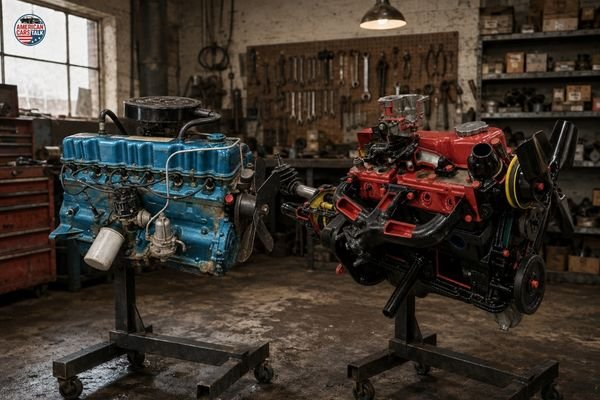
Detroit sold horsepower on the hood and paid its bills somewhere else. The ten engines below never got a stripe package or a two page spread in the buff books. They went into mail trucks, taxis, school buses, panel vans and municipal fleets, and most of them were still turning over long after the bodies around them had rusted into scrap.
A few were mocked when new. One of them is still in production today under a company badge that did not exist when the design was drawn.
10. Pontiac Iron Duke 2.5
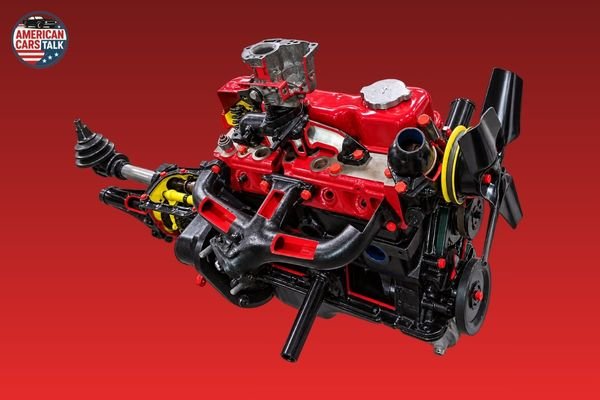
When the 1973 oil embargo hit, the smallest engine Pontiac built was a 350. What the division came back with displaced 150.8 cubic inches: four inch bore, three inch stroke, cast iron block, cast iron head, 375 pounds dry.
It arrived for 1977 in the Astre, Sunbird and Phoenix, and because those cars had been laid out around Chevrolet engines, the Duke got a Chevrolet bellhousing pattern. Output across sixteen years of production ran from 85 to 110 hp.
Then it went to work. In 1986 the Postal Service ordered 99,150 Grumman Long Life Vehicles for over $1.1 billion, aluminum bodies on Chevrolet S-10 underpinnings, most of them carrying the 2.5 and a three speed automatic geared for walking pace.
The 1982 DJ-5L mail Jeep used one as well, bolted to a Chrysler 904. Pontiac shut the line down in 1993. Tens of thousands of LLVs were still working routes three decades later.
9. GM 6.2 and 6.5 Detroit Diesel
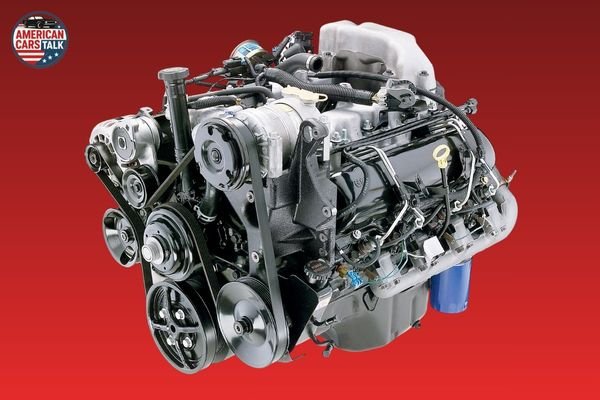
The 6.2 (379 cubic inches) arrived for 1982 in the C/K pickup, developed with Detroit Diesel and engineered to bolt straight into the space and mounts of a gasoline V8. It made 130 hp and 240 lb-ft at launch and 160 hp and 285 lb-ft at the end of its run. Note that the 6.5 that followed in 1992 is 395 cubic inches, not 379: bore went to 4.055 inches, stroke to 3.818.
Nobody called it fast. It was, however, the standard engine of the HMMWV, the Hummer H1 and the CUCV. GM stopped offering it in light trucks after 2002 and replaced it with the Duramax, but the story does not end there.
With the Moraine plant closing, General Engine Products, a subsidiary of AM General, opened a plant in Franklin, Ohio and began building the engine in July 2000 as the Optimizer 6500. AM General still lists it as a current product, in naturally aspirated and turbocharged form, for military, marine and commercial use.
8. Ford 2.3 Lima
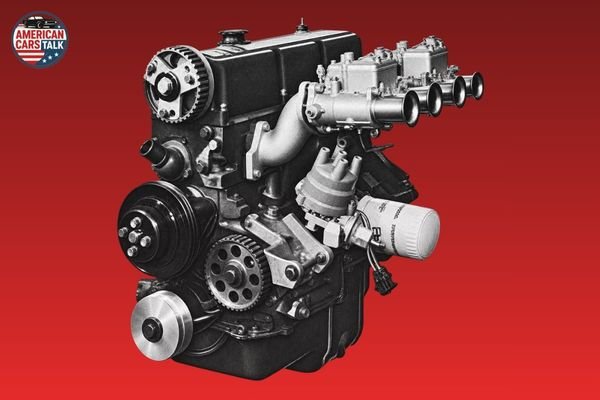
Ford’s first metric engine for North America: 140 cubic inches, iron block, iron head, belt driven single overhead cam running finger followers. It was the base four in the Pinto, Mustang II, Fairmont, Ranger and early Aerostar from 1974 through 1997, built mostly at the Lima plant in Ohio with additional production at Taubate in Brazil.
Turbocharging came with the 1979 Fox Mustang, port injection with the 1983 Thunderbird Turbo Coupe, and an intercooler with the 1984 Mustang SVO, which started at 175 hp and reached 205.
The unexpected part happened in England. Ford homologated 5,000 Merkur XR4Ti models by April 1985 so Andy Rouse could race one in the British Saloon Car Championship.
Rouse later described the engine as basic, two valves per cylinder, but said that turning up the boost gave him more power and more torque than the Rovers. He won nine of twelve rounds and took his fourth British title. The Pinto engine won a European touring car championship.
7. Chevrolet 235 Stovebolt
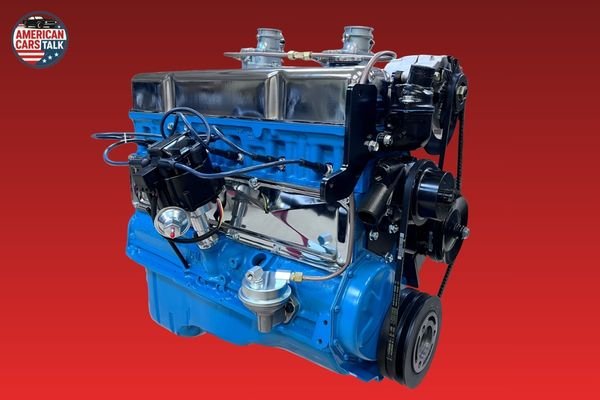
The 235 first appeared in 1941 in heavy trucks, rated at 123 hp with solid lifters. What most people miss is how primitive the bottom end stayed.
Through the 1952 model year the engine used babbitt bearings and a dipper and splash oiling system, essentially the arrangement of a stationary engine, with the connecting rods flinging oil out of troughs in the pan.
Full pressure lubrication, insert bearings and aluminum pistons arrived for 1953 with the Powerglide cars and became universal for 1954.
That same pressure oiled 235 became the Blue Flame. In the 1953 and 1954 Corvette it ran 8.0:1 compression, a truck camshaft with solid lifters, dual valve springs and three side draft Carter YH carburetors, one per pair of cylinders, for 150 hp at 4,200 rpm.
American production ended in the early 1960s. Brazilian production of the family continued into 1979.
6. Chevrolet 250 and 292
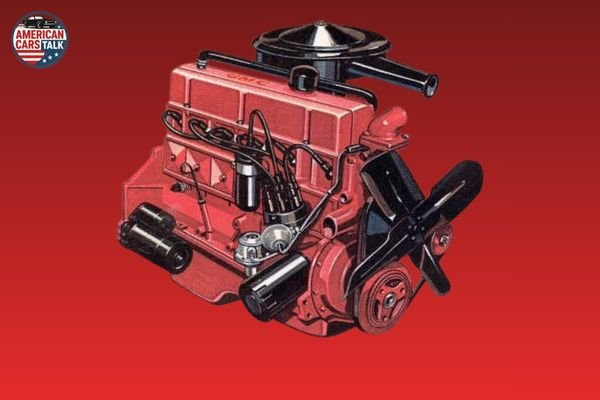
The Turbo-Thrift family replaced the Stovebolt for 1962 and improved on it in every measurable way: seven main bearings instead of four, thin wall castings that cut roughly 100 pounds, and 4.40 inch bore spacing shared with the small block V8. The 194 came first, the 230 and the truck-only 292 for 1963, the 250 for 1966.
The 292 is the odd one. It uses a deck 1.75 inches taller than the rest of the family, a relocated engine mount on the passenger side, and 2.100 inch rod journals, the same size as a small block. It was never a half ton engine.
It went into three quarter ton and larger trucks, medium duty chassis, step vans and school buses, and it made its peak torque just off idle. Sources disagree on when it stopped: Wikipedia dates the North American family to 1988, while several truck references put 292 production at 1990 with assembly moved to Mexico in the 1980s. Brazilian and Argentine versions ran later still.
5. Chevrolet 4.3 Vortec
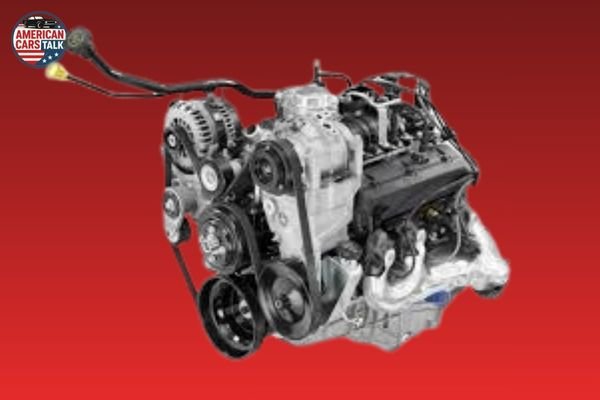
Bore 4.00 inches. Stroke 3.48 inches. Those are 350 numbers, and that is the whole idea: the 4.3 is a small block with cylinders three and six deleted, sharing bore spacing, deck height, pistons, bearings, oil pump and most valvetrain parts with the V8. To get even firing, Chevrolet offset the rod pins by 30 degrees and enlarged the journals to 2.25 inches.
It launched for 1985, replacing the 229 in the full size car and El Camino and the 250 six in full size trucks and vans, and it was the first engine GM badged Vortec. A balance shaft came in 1992.
A turbocharged version with an intercooler and nodular iron main caps produced 280 hp in the 1991 GMC Syclone. Millions went into S-10 pickups, Blazers and Astro vans. Production ran to 2014, when an unrelated aluminum block engine of the same displacement took the name.
4. Ford 300 Inline-Six
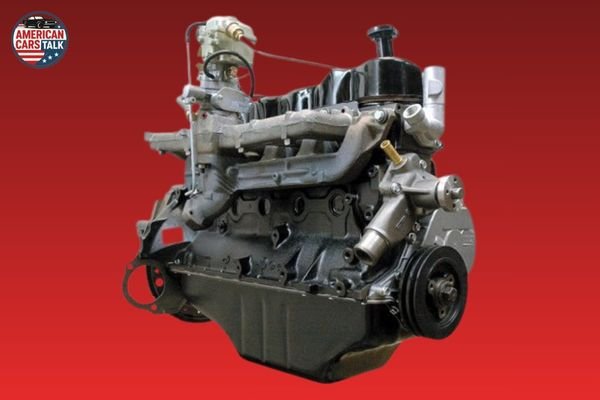
Three hundred cubic inches, four inch bore, a stroke just under four inches, seven main bearings, cast iron everything, and a deck ten inches tall. Ford introduced it for 1965 alongside the 240 and built it at Cleveland.
It is worth correcting one detail that gets repeated: the camshaft is gear driven rather than chain driven, but light truck engines used fiber and phenolic gears, with metal gears reserved for commercial and industrial applications.
The numbers stayed modest and nobody minded. A 1996 F-Series with multiport injection was rated at 150 hp at 3,400 rpm and 260 lb-ft at 2,000 rpm, which is where a loaded truck actually lives. Ford dropped it after 1996 when the redesigned 1997 F-150 and Econoline moved to the 4.2 liter Essex V6 and the Triton V8s. Thirty one years, and the engine routinely outlasted the sheet metal wrapped around it.
3. Chrysler LA 318
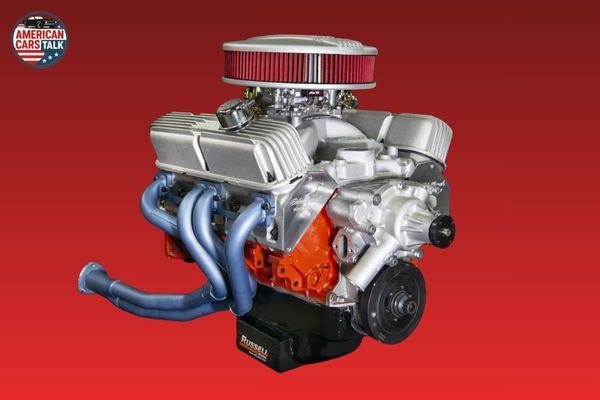
Chrysler had already sold an A series 318 with polyspheric heads. The LA version that arrived for 1967 was a different engine: 3.91 inch bore, 3.31 inch stroke, wedge chambers, hydraulic cam, forged crank, two barrel carburetor and 9:1 compression. From 1978 police cars got four barrels. In 1985 it picked up roller lifters and fast burn heads, and from 1988 to 1991 trucks and vans ran throttle body injection.
The 340 got the magazine covers and the 383 got the stripes. The 318 got the Diplomat, the Gran Fury, the taxi fleet, the Ram van and the motorhome chassis. In 1992 it became the Magnum 5.2 with multiport injection, new heads and 230 hp, and in that form it ran until the 2003 Dodge Ram Van. Thirty six model years for one architecture.
2. Chrysler Slant Six 225
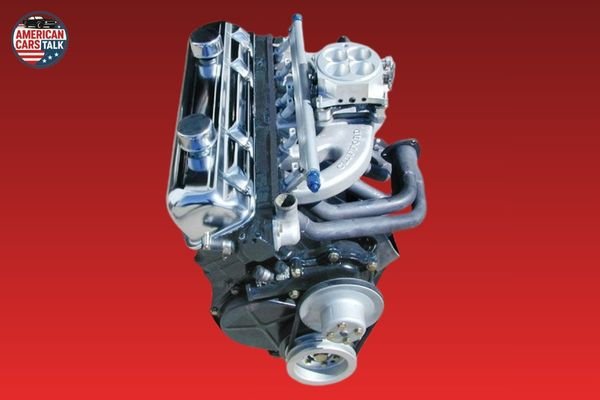
The tilt was not a styling flourish. Chrysler’s new compact needed a low hood, the six was too tall, and moving the water pump would have pulled the fan off the radiator centerline.
Leaning the block 30 degrees to the right solved both problems at once and left room for a long branch intake manifold with nearly equal runner lengths, which is why the engine breathed better than its rivals. The 225 measures 3.40 inches by 4.125 inches and made 145 hp at 4,000 rpm and 215 lb-ft at 2,400 rpm when new.
Its exit was drawn out. American passenger cars kept it through 1984 in the Fifth Avenue, Gran Fury and Diplomat. Dodge trucks kept it through 1987. Marine versions ran to 1991.
After that the record gets murky: Wikipedia gives the production span as 1959 to 2000, other sources describe Mexican assembly and crate engine supply continuing to that date. What is not in dispute is that a design signed off in the late 1950s was still being cast when Chrysler was building Vipers.
1. AMC 232, 258 and Jeep 4.0
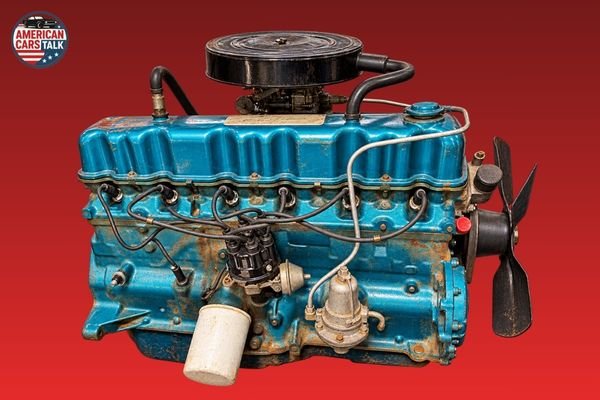
American Motors could not afford to be wrong. The new six it designed for 1964 got seven main bearings and a short stroke, and it was introduced in May of that year in 2,520 Rambler Classic Typhoon hardtops, Solar Yellow with a black roof, 145 hp with a one barrel.
The 232 ran to 1979. The 258 arrived for 1971 on a raised deck with a 3.895 inch stroke. The 4.0 of 1987 kept the architecture and changed the proportions: bore out to 3.875 inches, stroke down to 3.414, 242 cubic inches, fuel injection, and by 2001 a rating of 190 hp and 235 lb-ft.
One correction to the folklore. Renault never built this engine. It took a controlling interest in American Motors in 1980, Chrysler bought AMC outright in 1987, and Daimler arrived in 1998, but the six was designed, tooled and produced by the same engineering lineage throughout. The last one went into a 2006 Wrangler TJ, the final vehicle to carry American Motors parts. Forty two years.
Every one of these engines was specified by somebody doing arithmetic rather than dreaming. Fleet managers, postal contractors, school districts, plumbers. That is a duller kind of immortality than a Hemi gets, and it lasted longer.
