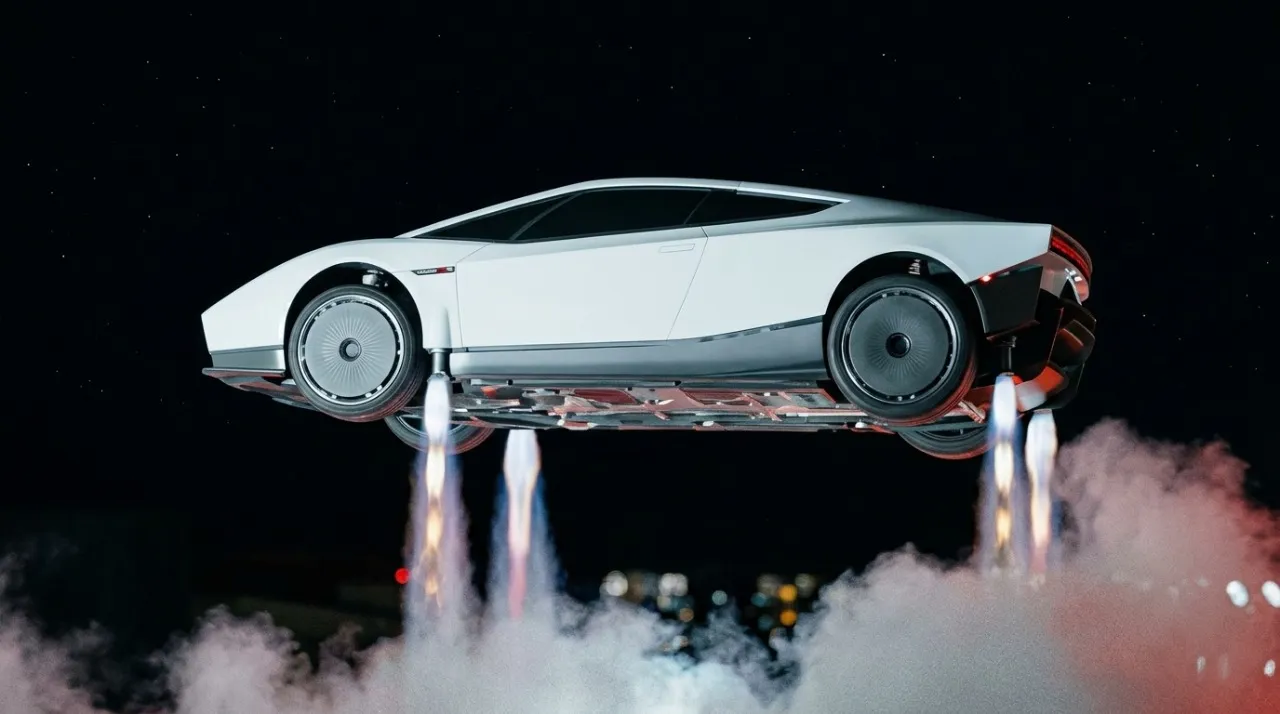
The new Tesla Roadster can launch with cold-gas thrusters. Refilling them is another matter. Tesla engineering chief Lars Moravy told Top Gear that the nitrogen tank behind the seats of the Thrust version currently takes two to six hours to fill. The system it feeds runs for about five seconds.
Moravy made the comment in a video interview published on October 16, 2026, the day after the car’s public reveal. He put current fill times at two to six hours and said Tesla hopes to bring that below 30 minutes. On how often a full tank can be used, he described the system as one-time use.
Three Versions, One Tank Problem
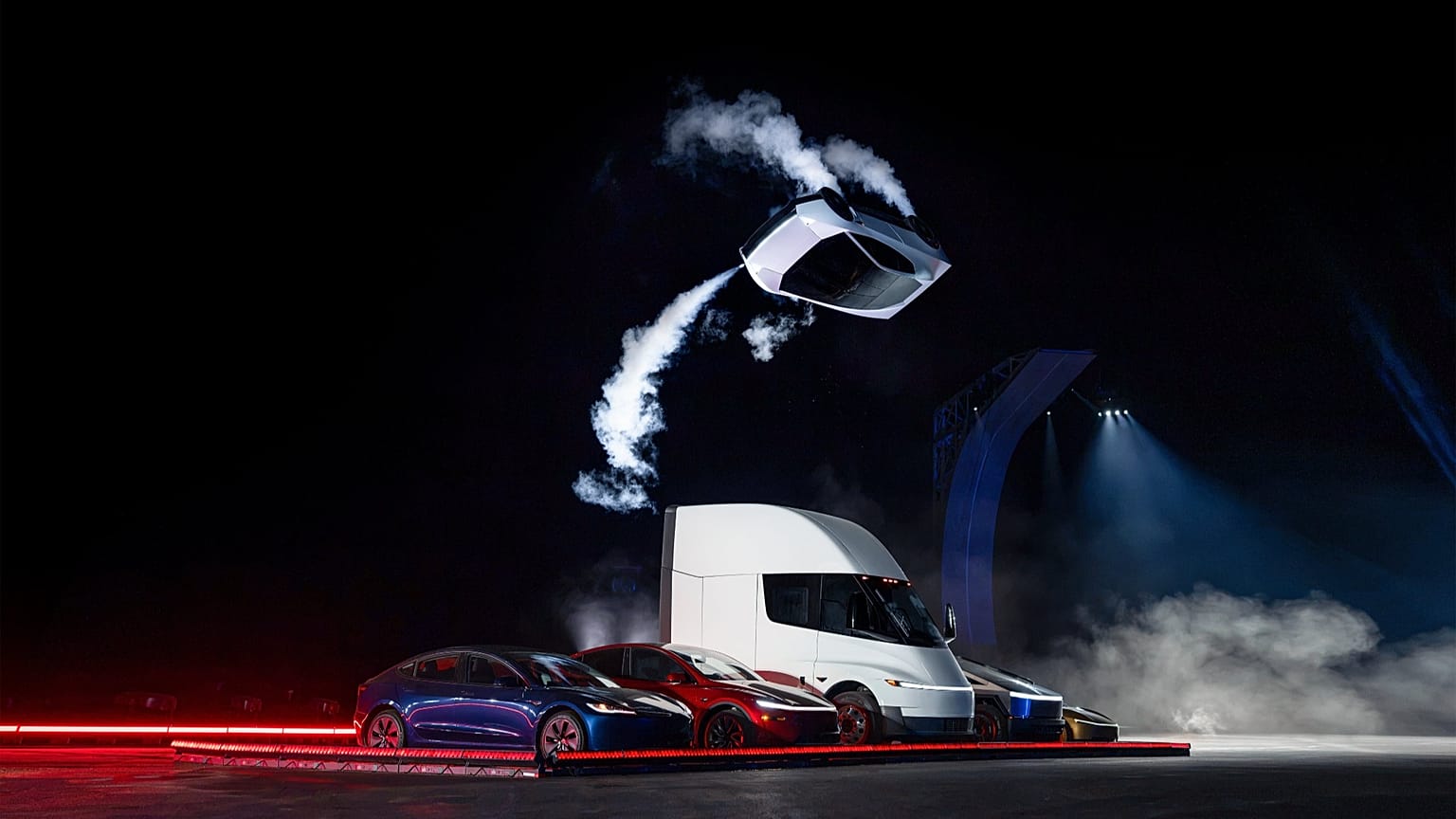
Tesla unveiled the second-generation Roadster on October 15 at the SpaceX test site in McGregor, Texas, after a two-week weather delay. It comes in three versions, and only two of them carry thrusters.
The Performance model has two seats, an active aerodynamics and fan suction system, and no compressed gas at all. Tesla claims 0 to 60 mph in under 1.6 seconds. The reservation costs $50,000.
The Thrust model adds a 200-liter carbon-overwrapped pressure vessel, built on SpaceX tank technology, where the luggage space would otherwise be. It holds nitrogen at up to 10,000 psi, roughly 690 bar, and feeds four nozzles at the rear. Tesla claims 0 to 60 mph in under 0.9 seconds. The reservation costs $250,000.
The Rocket model is a single-seater. A second 400-liter tank takes the place of the passenger seat, for 600 liters in total, feeding ten thrusters including downward-facing units that let the car briefly lift off the ground. It is available by invitation only, and Tesla says it is not approved for use on public roads.
None of the acceleration figures has been independently tested. The 0.81-second run shown on stage was a Tesla demonstration. No final prices have been announced for any version, and Elon Musk said production is planned to begin in 2028.
What It Takes to Refill
A regular shop compressor cannot get anywhere near 10,000 psi. According to MotorTrend, which ran the numbers on the system, refilling means using commercial boosters to push bottled nitrogen, normally stored at 300 to 3,000 psi, up to the tank’s working pressure. The Supercar Blog and TipRanks add that many standard high-pressure nitrogen systems top out around 6,000 psi, so a dedicated booster would be needed.
The two-to-six-hour figure applies to the 200-liter tank. For the Rocket, Hagerty presenter Henry Catchpole put the time to fill all 600 liters at six to seven hours.
Tesla has not said how owners will refill their cars. MotorTrend mentions a possible future home nitrogen separator and compressor, and says only that it would be expensive. According to Exotic Car Trends, Musk claimed on stage that the car could recharge its own tank, but Tesla has not explained how that fits with the external refills its engineers described.
How Much It Costs
This is where the viral headlines run ahead of the facts. A widely shared claim, based on a breakdown by YouTuber RyanShawTech and repeated by Supercar Blondie, puts the price of a suitable booster at up to $10,000. That figure does not come from Tesla, and none of the other outlets that covered the refill times confirms it. Tesla has published no cost for the nitrogen, the refill equipment or a refill service.
The honest answer for now: refilling requires industrial high-pressure equipment, and nobody outside Tesla knows what an owner will pay for it.
One Launch or Several
Even the “one launch per tank” point is not as clear as it sounds. Moravy described a full deployment as one-time use, emptying the tank in about five seconds. MotorTrend’s calculation suggests a single 0 to 60 mph run needs thrust only briefly, using an estimated 15 to 22 kilograms of nitrogen from a tank that should hold more than 100 kilograms. By that estimate, a full tank could cover more than one sprint, as long as the system is not run until empty.
Tesla has not clarified which reading applies to customer cars.
A System Still in Development
Moravy made clear that the refill process shown so far is not final. Tesla is working on a different filling system, and the half-hour target is a goal, not a promise.
The Roadster itself has a long history of moving dates. Tesla first showed it in November 2017, took $50,000 deposits and promised production in 2020. The timeline then slipped year after year before the October 2026 reveal and the current 2028 target.
Musk described the car as the best of the last human-driven cars, and said it will eventually be the only Tesla customers drive themselves. For buyers of the Thrust version, the more practical question is simpler: where they will fill the tank, how long it will take, and what it will cost. Tesla has not answered that yet.